The Secret Heartache in the Biggest Movie Ballad
Imagine a song so magnificent, so perfectly pitched for cinematic romance, that its success would tear the very band who recorded it apart. That is the paradoxical story of Berlin’s “Take My Breath Away.” Here in Europe, where the group’s chosen name held a subtle cool, evoking pioneers of electronic music like Kraftwerk, the single exploded in 1986. It became inescapable—a sleek, synthesized soundtrack to the Cold War’s end and the dawn of a new blockbuster era.
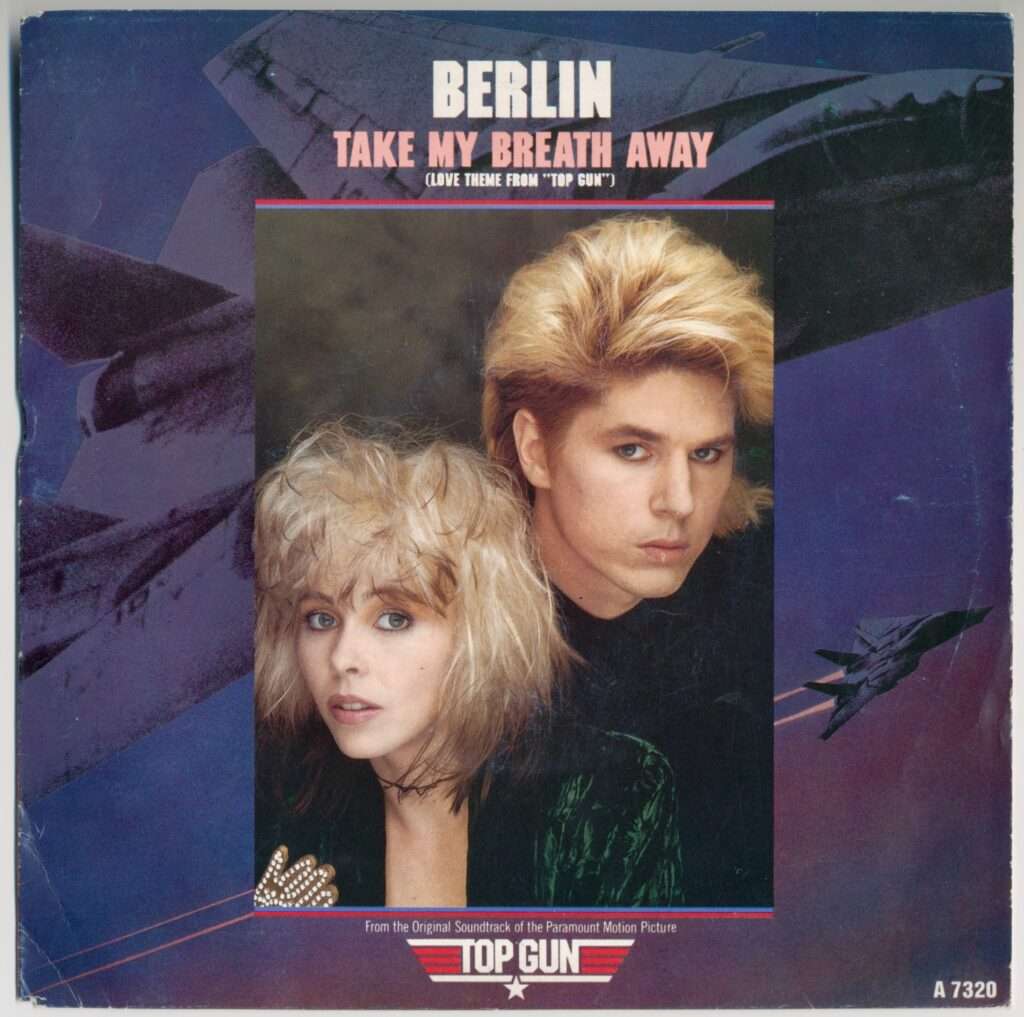
In Sweden, this American New Wave group, fronted by the magnetic Terri Nunn, was adopted with enthusiasm, quickly hitting number one on the influential national radio chart, Trackslistan, where it remained a fixture for seven weeks. It finished the year as the fifth most popular song on that chart. Its massive appeal across the continent—hitting number one in the Netherlands and the UK, and securing top-ten spots everywhere from Switzerland to Belgium—confirmed its broad continental appeal, a testament to its glossy, irresistible sound. Yet, behind this European triumph lay a conflict of artistic identity.
The Producer’s Perfect Mandate
The song was not born from band rehearsals in a grimy club; it was an industrial-grade creative commission from Hollywood, specifically from the co-producer of Top Gun, Jerry Bruckheimer. He needed a slow, emotional ballad to score the pivotal romantic scene in the film, a functional piece of art designed purely to convey a state of profound, suspended love.
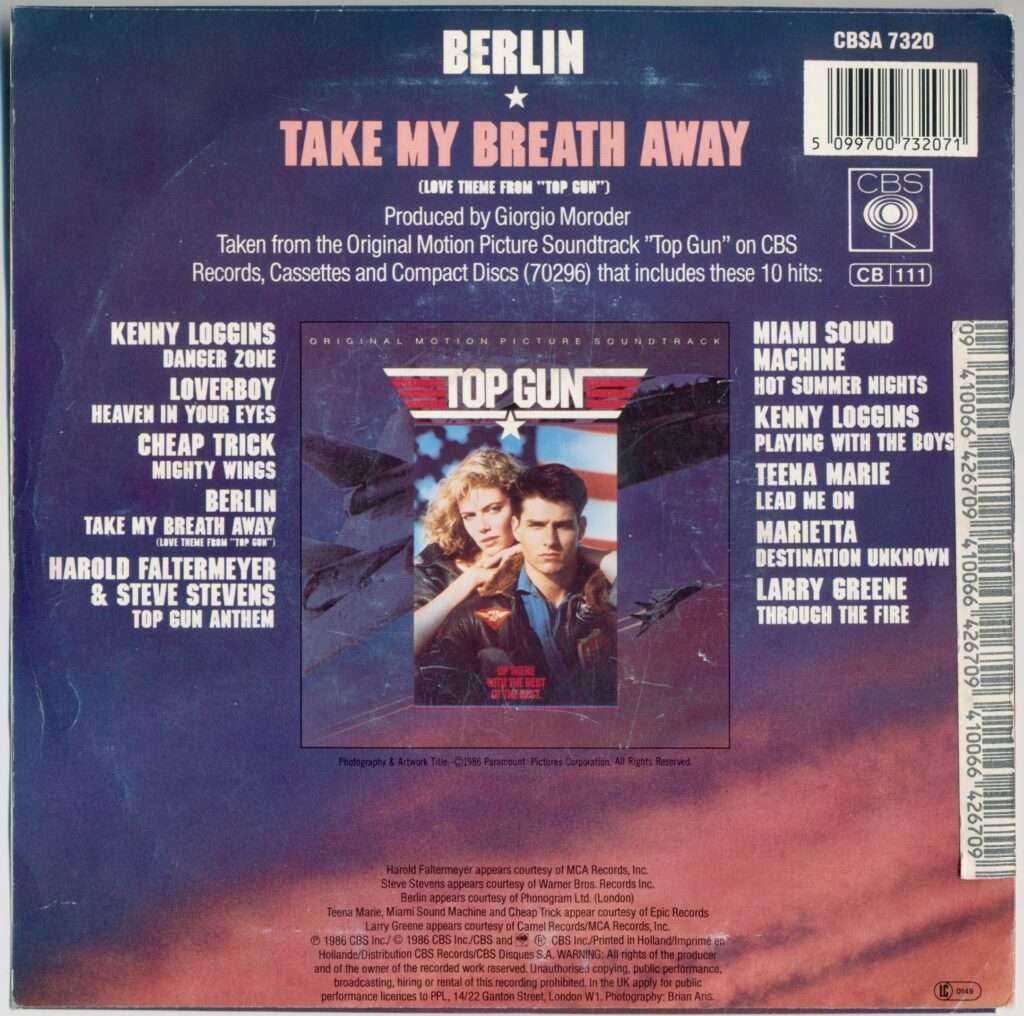
The legend behind the song’s creation is as wild as any movie plot: the iconic Italian producer Giorgio Moroder composed the backing track and the distinctive synthesized bass sound, but the lyrics came from an unlikely source—Tom Whitlock, who was hired after he came to fix Moroder’s Ferrari. Moroder would later joke that the lyrics written by a car mechanic won him his third Academy Award. This unusual partnership demonstrates the commercial genius required for 1980s blockbuster success, with the same duo delivering both the high-energy “Danger Zone” and this atmospheric ballad. The song’s unmistakable sonic identity, those placid, weightless synth layers, is actually built around the very specific, common “Bass 2” patch (Preset 16) from the revolutionary Yamaha DX7 synthesizer. The magic came from Moroder’s arrangement, transforming a stock digital sound into a definitive romantic theme.
Terri Nunn’s Concession
Getting the song recorded created instant tension. Terri Nunn, the vocalist Moroder advocated for, initially wanted a vocal style aligned with Berlin‘s edgier electronic New Wave roots. Moroder, however, insisted on the soaring, overtly dramatic delivery the cinema demanded. Nunn confessed she initially felt the producer had “messed it up” and that the track was “ruined”.
However, her performance itself was deeply personal. Nunn revealed she sang from a genuine place of “sadness and longing” after four years of touring without a personal relationship. That vulnerability gave the track its heart, the emotional depth that transcends the glossy production. Her concession that Moroder “knew what he was doing” came later, when the song became their biggest hit globally. It is the ultimate story of an artist sacrificing their immediate vision for a commercial success they could never have achieved otherwise.
“Watching in slow motion as you turn to me and say / ‘My love, take my breath away'”
The Bitter Triumph
The success of “Take My Breath Away” was profoundly bittersweet for Berlin. It gave the band its first major global chart hit, a feat that included conquering the charts in the US and the UK. Yet, this triumph was also a radical departure from their established synth-driven sound, known from earlier tracks like “The Metro”. The core band members were deeply dissatisfied and felt alienated by the new, commercially imposed direction, having minimally contributed to the track’s composition.
This success proved catastrophic, contributing directly to the band’s dissolution in 1987. Despite the internal conflict, the song’s victory at the 59th Academy Awards for Best Original Song in 1987 conferred permanent cultural legitimacy upon it. Today, Nunn acknowledges the song is a permanent “cultural touchstone that captures the essence of an entire decade”. It is a masterpiece forged in contradiction, a glorious, worldwide hit that ultimately broke the band who performed it, securing a legacy they never quite claimed as their own.
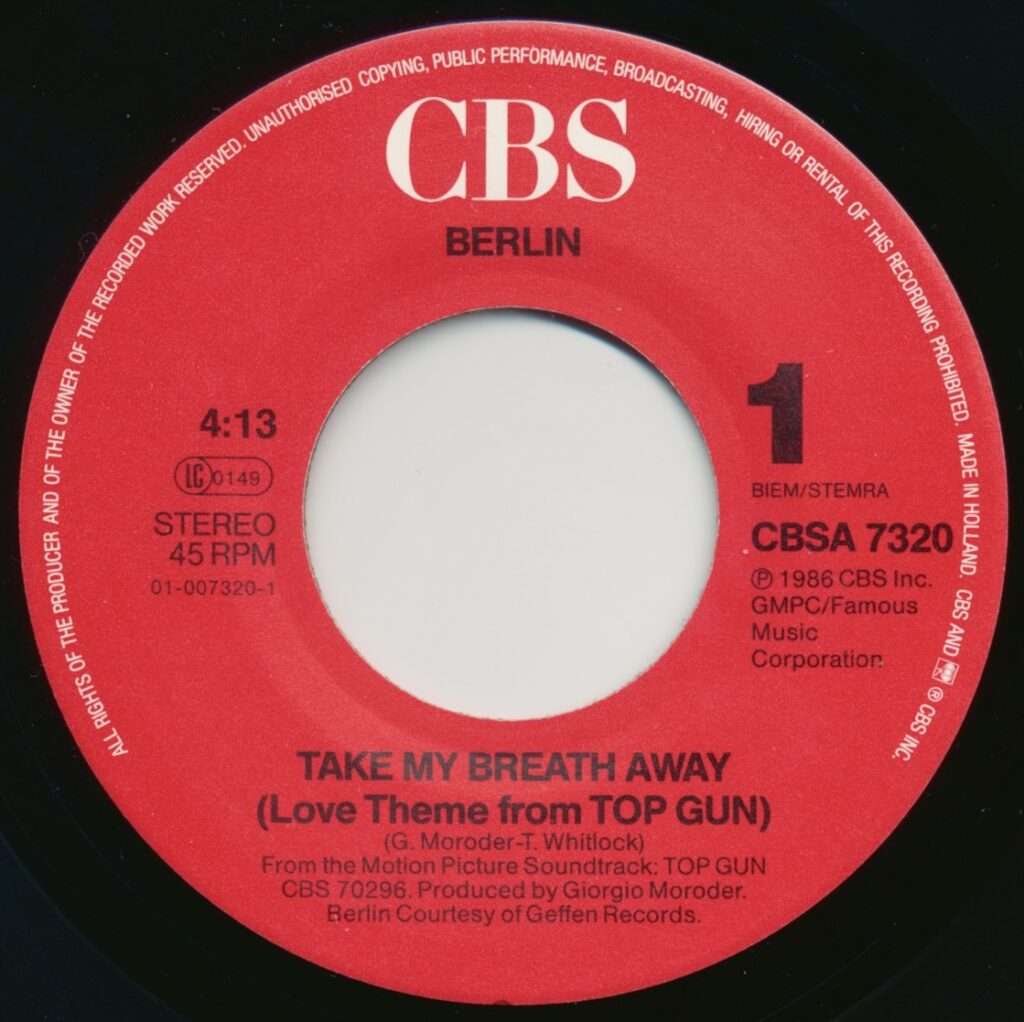
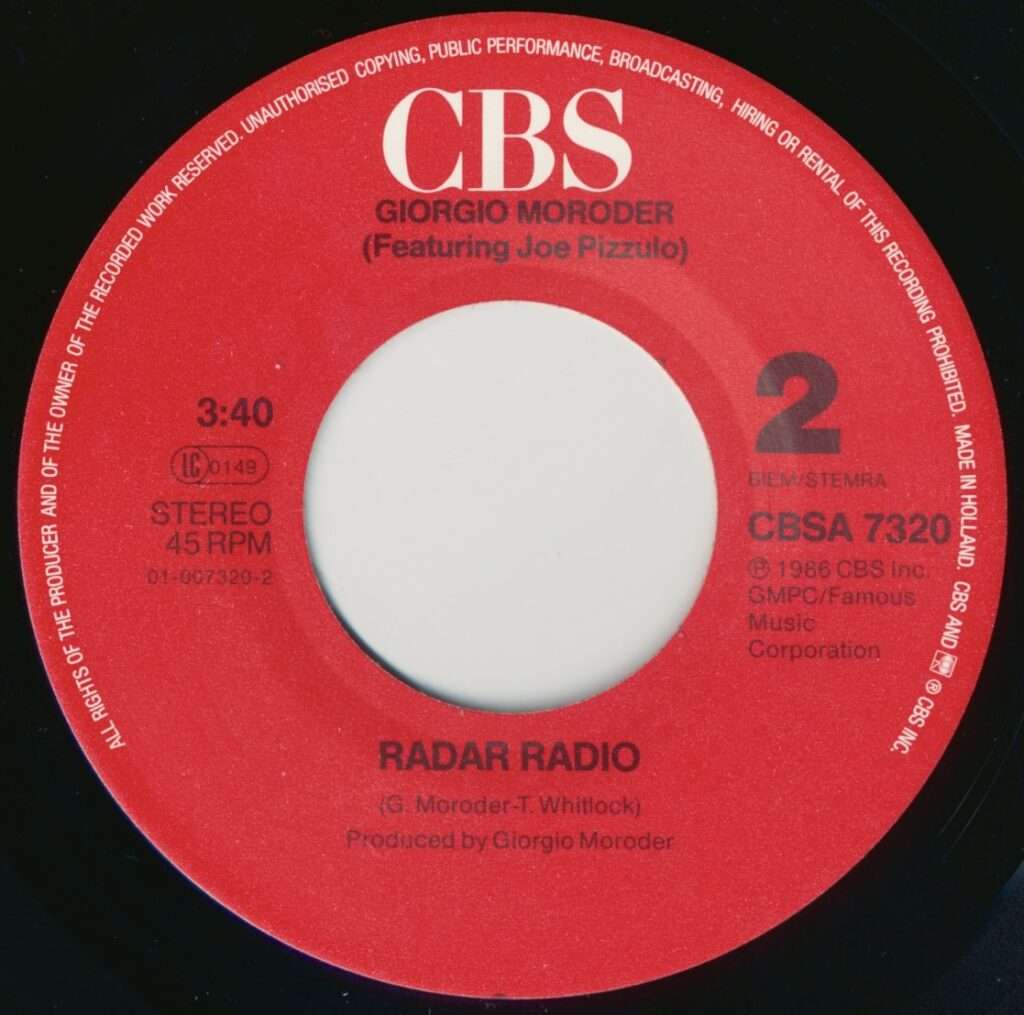
My copy: 7″, 45 RPM, Europe, 1986, CBS
Trackslistan (Swedish radio chart): 7 weeks, peaked at #1, #5 on year-end list 1986