The Italian Song That Conquered Swedish Radio
In 1986, the Italian Italo Disco group Scotch released their high-energy track “Mirage,” a song that performed respectably in its home country, but whose biggest, most enthusiastic audience turned out to be nearly two thousand kilometers away, up in Scandinavia. In Sweden, “Mirage” was a smash hit, a success story that wasn’t an accident of timing but the direct result of one man’s obsession with a better beat. The country took the song to its heart, making it a staple on the nation’s most important youth radio countdown program, Trackslistan, where it spent four weeks on the chart and peaked at the number one spot, becoming one of the most beloved tracks of the year.
The band itself, originating in Bergamo, Italy, was already well-known for hits like “Disco Band” (1984) and “Take Me Up” (1985). Their music, like the Italo Disco genre itself, was built on synthesized sounds, programmed drum machines, and unforgettable melodies. The core creative team for “Mirage” included lead vocalist Vince Lancini and keyboardist Fabio Margutti, who co-wrote the composition with key producer David Zambelli. This team ensured the track possessed the sophisticated, electronic sound that gave Scotch its international reputation. However, the magic of the Swedish success lay not just in the Italian track, but in a localized intervention.
The Sound of an Illusion
The very title, “Mirage,” suggests a search for something fleeting or illusory, and the song’s lyrics play with this idea. The verses are sung mostly in English, touching on existential themes like fate and the monotony of time: “Every day, every night. We talk about the same old story. Every day, every time. We put the envy on the glory”. This introspective mood is then immediately contrasted by the powerful, melodic Italian chorus: “Stasera la luna, ci porterà fortuna” (Tonight the moon, will bring us luck). This contrast between the philosophical English and the hopeful, immediate Italian chorus captured the genre’s effort to be both globally accessible and locally rooted.
Vince Lancini, the lead vocalist, revealed there was a layer of self-aware irony in the lyrics. He admitted to “making fun of myself” in the songwriting. This suggests the mirage wasn’t just a search for luck, but perhaps a playful critique of the fleeting or artificial nature of the dance music world. The prominent Italian lyric was so memorable that the song is still sometimes informally called “Stasera La Luna” by fans and collectors.
The Swedish Remix Movement
The reason “Mirage” became such a force on Swedish radio was directly tied to the highly demanding and dynamic Swedish dance floor and DJ culture. A local record store owner in Stockholm, Fredrik Ramel, who also co-owned the record shop Vinyl Mania, recognized that many original Italian club mixes had a “weak” quality or structure that simply wasn’t optimal for Swedish clubs.
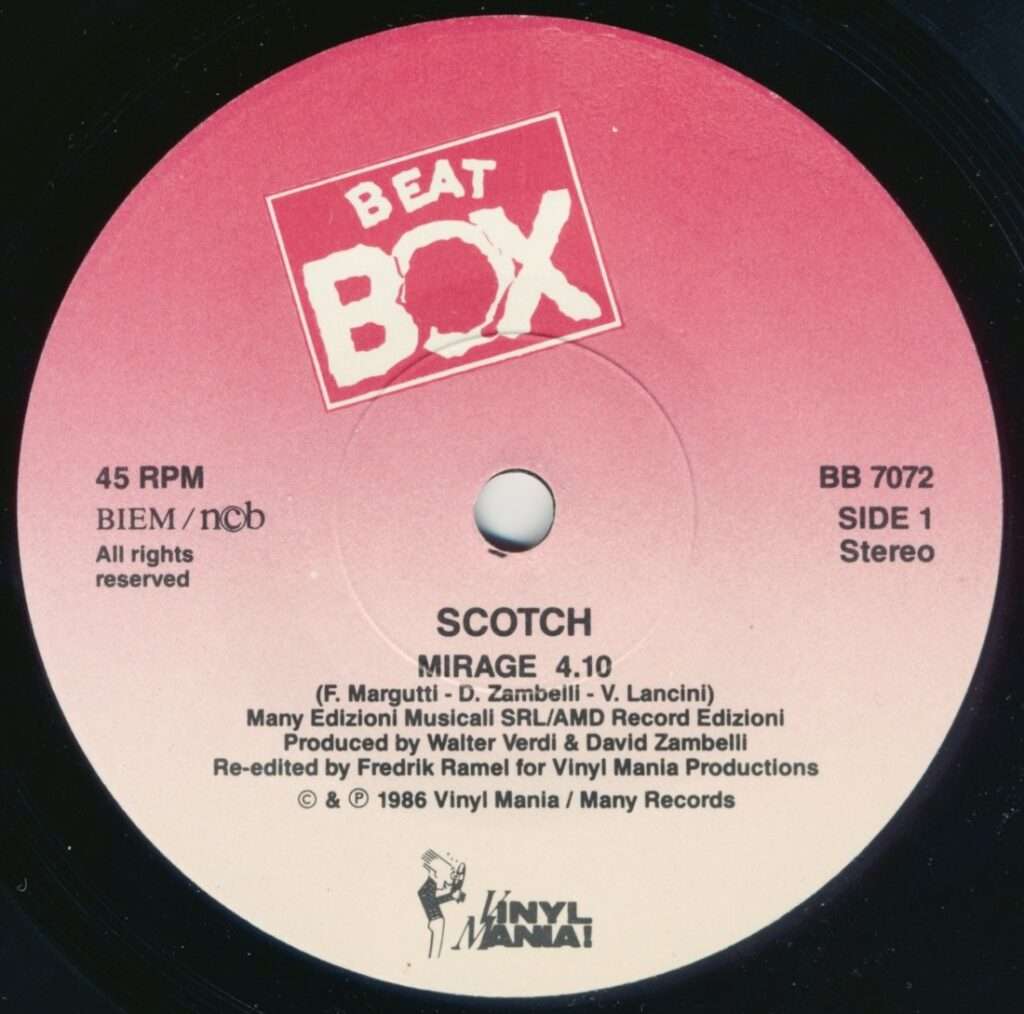
Ramel’s solution was the foundation of the legendary “Swedish Remix” movement. Working with studio engineer Gunnar Silins, Ramel secured the original master tapes from Italy and would “cut, re-edit, extend, and overdub the track”. This process of localized optimization—tailoring the foreign tracks to the Swedish aesthetic—was so successful that Ramel and Silins applied it to over 50 licensed Italo Disco tracks. The Swedish pressing of “Mirage” explicitly bore the credit: “Re-edited by Fredrik Ramel for Vinyl Mania Productions”. This attention to detail ensured the song’s sonic profile was maximally suited for the Northern European market, which explains its widespread success on Trackslistan and its status as a staple on Swedish radio in 1986.
“Stasera la luna / Ci porterà fortuna, la luna”
An Instant Classic
The song’s hit quality was immediately recognized by its Italian peers. In a testament to the producer-driven and highly competitive nature of Italo Disco, a major cover version was released quickly in 1987 by another Italian group, Finzy Kontini. This rapid re-recording by a peer group shows that the primary value often lay in the underlying composition and publishing rights, which were held by the original writers and producers. The hit structure of “Mirage” was so valuable it warranted immediate replication to maximize market penetration across different labels and territories.
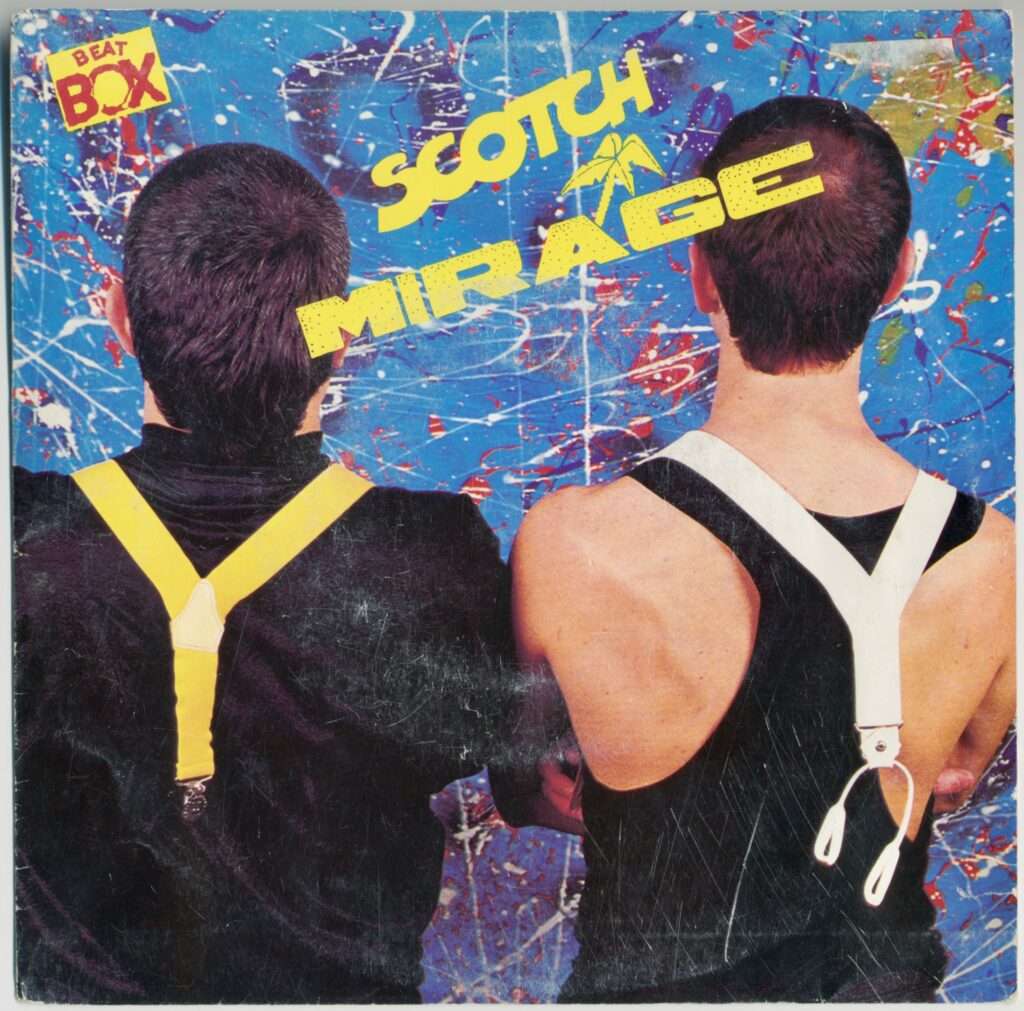
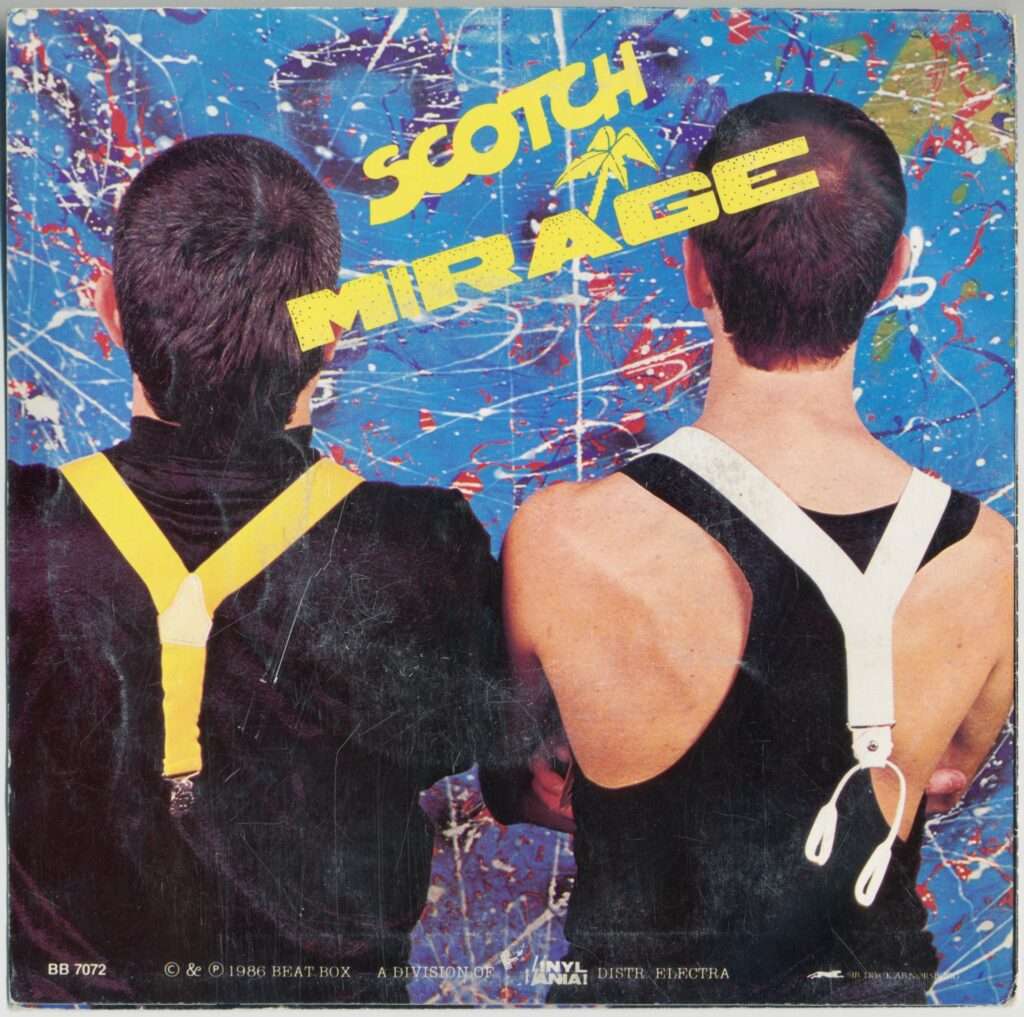
Beyond the sound, the visual identity created for the Swedish market also helped its success. The cover art for the Swedish release featured a stark, abstract aesthetic that deviated from the high-gloss, often romantic imagery of typical Italian covers. The artwork, with its two minimalist, confrontational figures, leaned closer to Northern European New Wave fashion, a strategic choice by the Beat Box label to present “Mirage” as more urban and credible for the selective Stockholm dance scene. This visual optimization mirrored the sonic changes made by Fredrik Ramel. The whole story of “Mirage” is a perfect encapsulation of how a local industry, driven by a record store owner who simply thought he could do it better, took a sophisticated Italian track and transformed it into a quintessential piece of the Swedish soundscape.
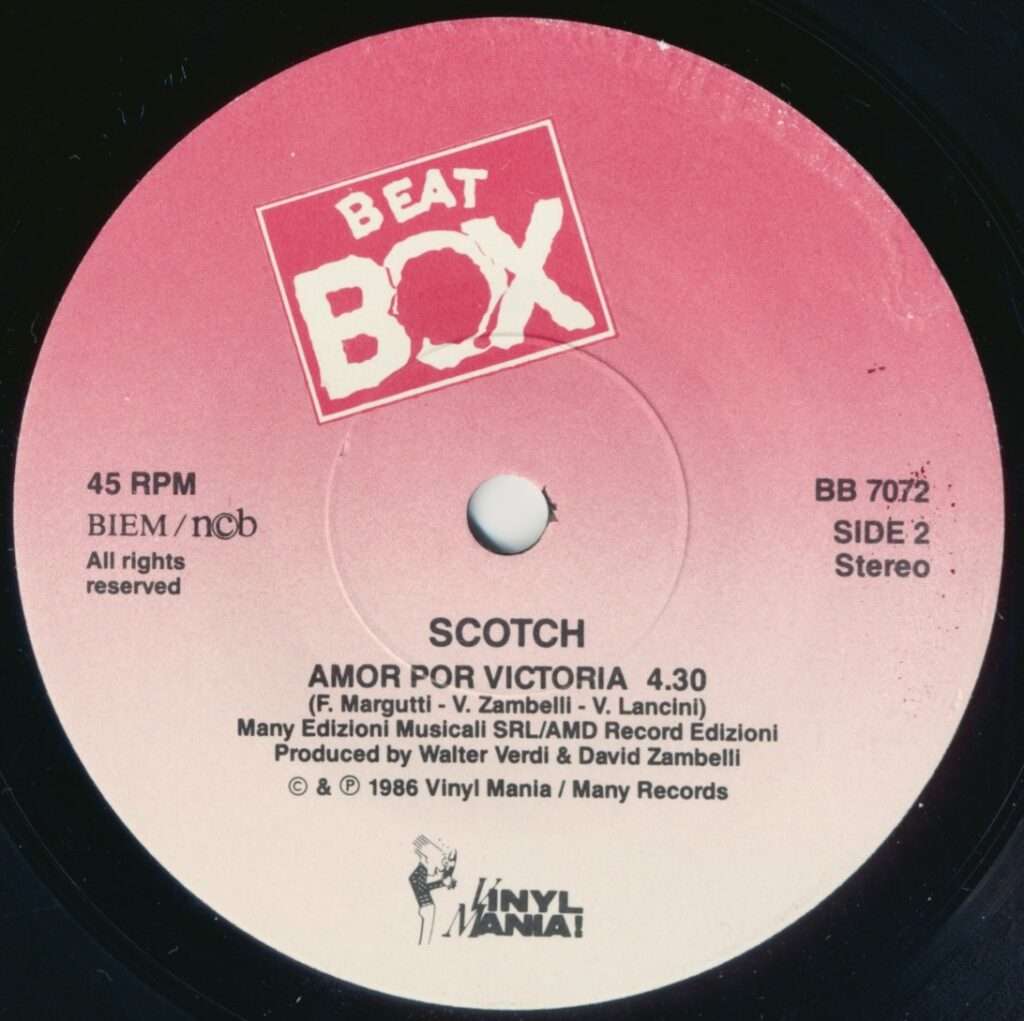
My copy: 7″, 45 RPM, Sweden, 1986, Beat Box
Trackslistan (Swedish radio chart): 4 weeks, peaked at #1, #53 on year-end list 1986