The Train Wreck That Launched a Legend
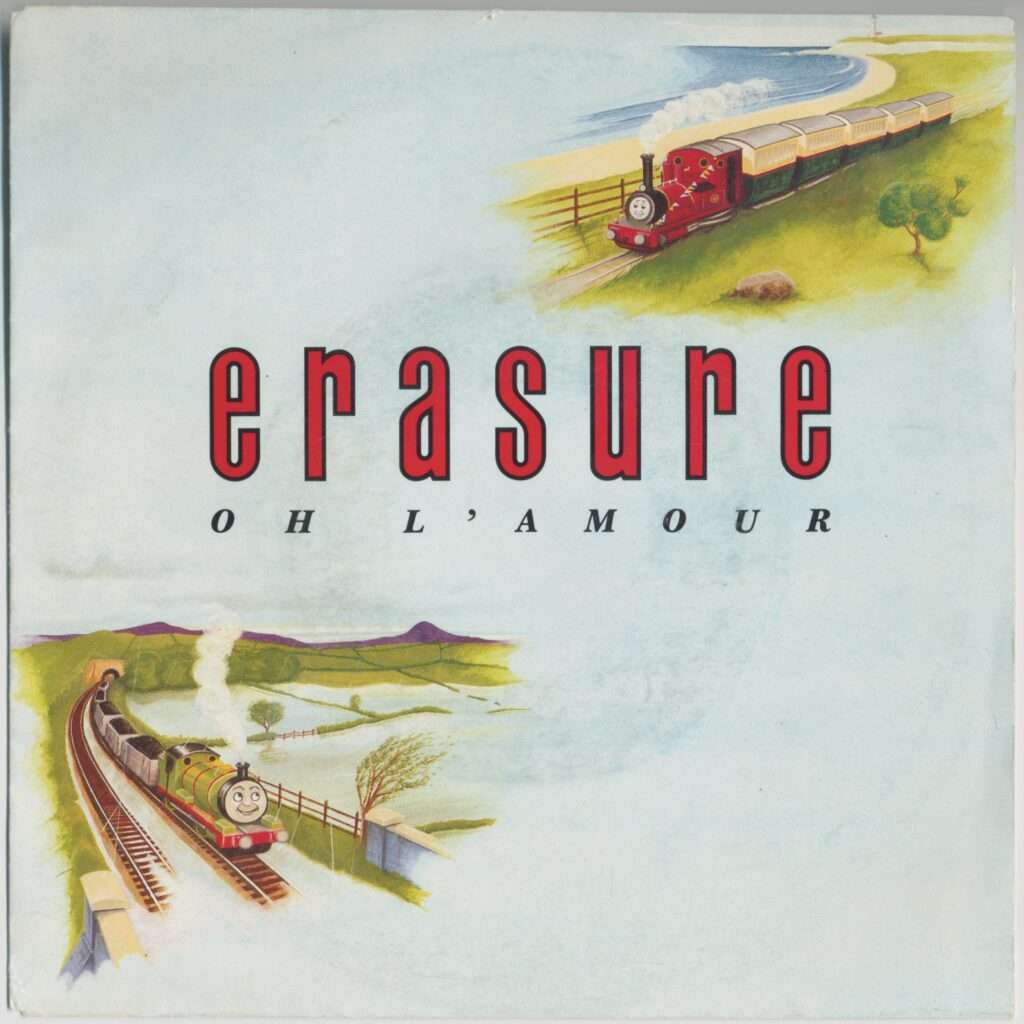
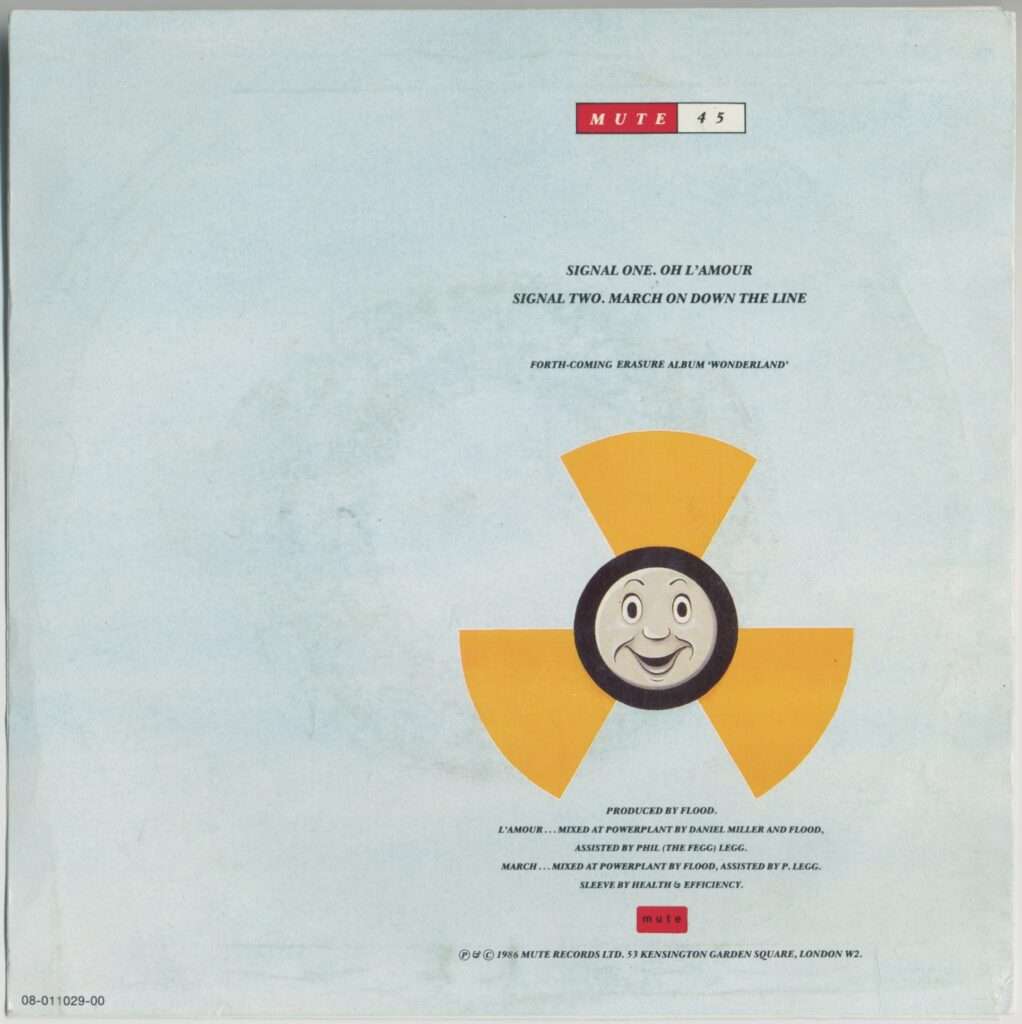
In 1986, Mute Records accidentally manufactured one of the most collectible synth-pop sleeves in history, only to have it pulled from shelves almost instantly. Erasure‘s third single, “Oh L’amour,” needed a breakthrough in their native UK, and Mute chose a whimsical sleeve design. The artwork featured charming, storybook steam trains, specifically characters from The Railway Series, the original books that inspired Thomas & Friends. The problem? Mute never secured the necessary copyright permissions. The rapid withdrawal of this “Thomas The Tank Engine” sleeve made these early pressings incredibly rare, a fittingly chaotic start for a song that would defy its initial UK failure and become an enduring European hit.
Heartbreak on the Dancefloor
“Oh L’amour” is a classic example of 1980s electronic music’s defining paradox. The driving, incessantly fast electronic rhythm, a blend of Synth-pop and Hi-NRG, was designed for the dancefloor. Yet, Andy Bell’s deeply vulnerable lyrics told a story of devastating, unrequited love. The French title translates simply to “Oh Love,” but the verses express the pain of being discarded: “You said I wasn’t your kind / Only here for the ride”. For Bell, an openly gay frontman, these words brought authentic feeling to themes of isolation and the search for belonging. Within the burgeoning LGBTQ+ club scene, this high-energy format allowed dancers a simultaneous, physical release of both joy and sadness, transforming personal heartbreak into a shared, potent anthem. The lyric’s inspiration even came from an unexpected source of theatrical melodrama: the 1939 film The Women. A character in the film, repeatedly seeking a divorce, would often repeat the line that catalyzed the song: “Oh, l’amour, l’amour, toujours l’amour!”.
The True European Breakthrough
While “Oh L’amour” stalled at a disappointing No. 85 in the UK , its fate was being decided across the continent and in dance clubs worldwide. The strong reception in key European and global markets provided the validation Mute Records needed to launch Erasure’s career. Nowhere was this more evident than in Scandinavia. In Sweden, the song was an immediate smash on the radio. The track spent six weeks on the influential radio chart Trackslistan in 1986, peaking at an impressive number 4. This early and sustained support in the Nordic territory cemented Sweden as one of the band’s foundational European markets, with the song even making the Trackslistan year-end list for 1986 at number 30. Mute strategically followed this enthusiasm by rushing out specialized Scandinavian vinyl pressings. Furthermore, an archival live recording from the Karlsson club in Stockholm in 1986 was later included on the expanded reissue of the Wonderland album, underscoring the vital importance of the Scandinavian audience to the band’s early touring and live sound.
“Oh l’amour / Broke my heart / And now I’m aching for you”
The Undeniable Quality of a Pop Song
The massive global success of “Oh L’amour” in 1986 proved that Vince Clarke and Andy Bell had written a masterpiece of synth-pop. Its chart performance was astounding: it reached No. 2 in South Africa, No. 3 on the US Billboard Hot Dance Music/Club Play chart, and No. 13 in Australia. This success provided the crucial momentum to keep the band going. Years later, the song’s intrinsic pop quality was definitively proven in the UK, the one territory that initially resisted it. First, the British pop duo Dollar covered “Oh L’amour” in 1987, taking their version all the way to No. 7 on the UK Singles Chart. This commercial triumph showed that the song was perfectly calibrated for the Top 10. Then, in 2003, an Erasure remix of the track finally achieved UK mainstream success, peaking at No. 13 and providing the band with the overdue domestic recognition the original had earned internationally two decades earlier. The track’s lasting appeal is now being celebrated as the title for a new stage musical, Oh L’Amour, a production that explores themes of LGBTQ+ visibility and love set against the backdrop of the turbulent 1980s.
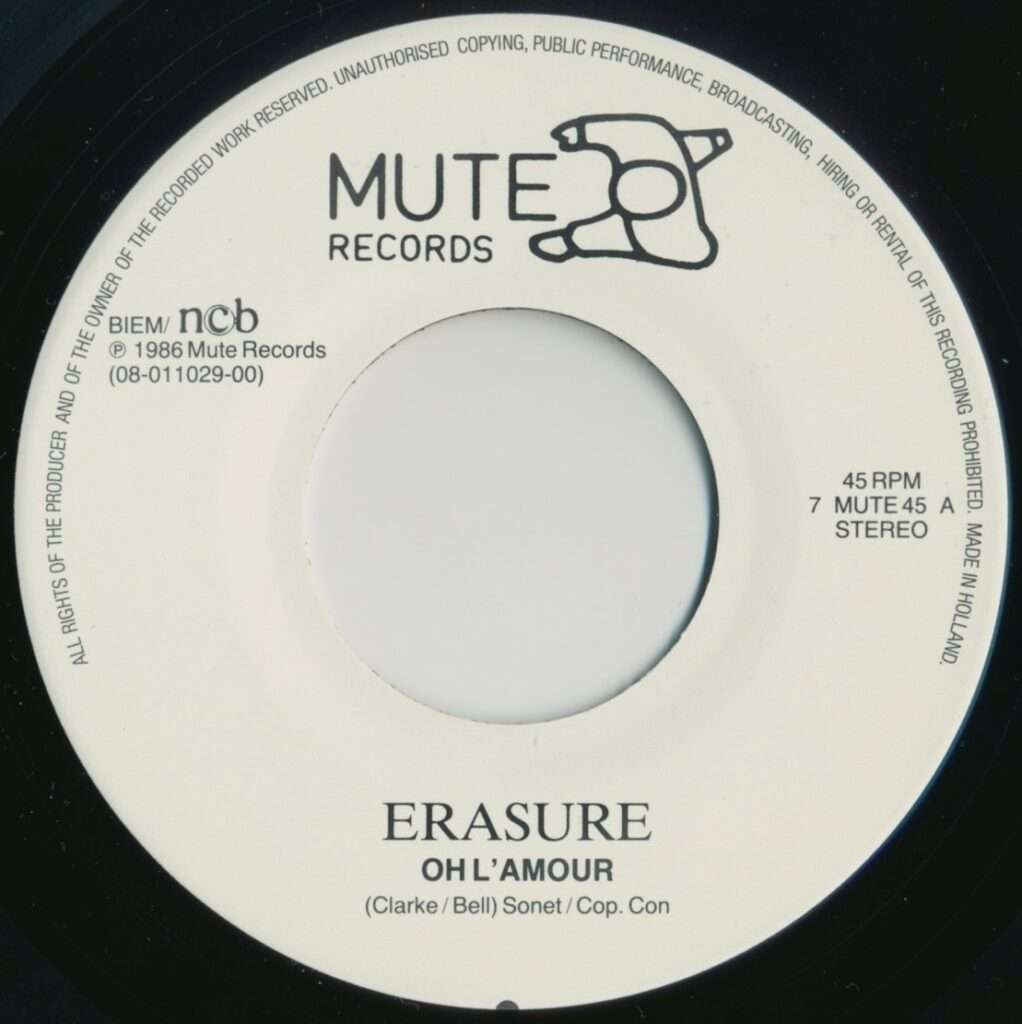
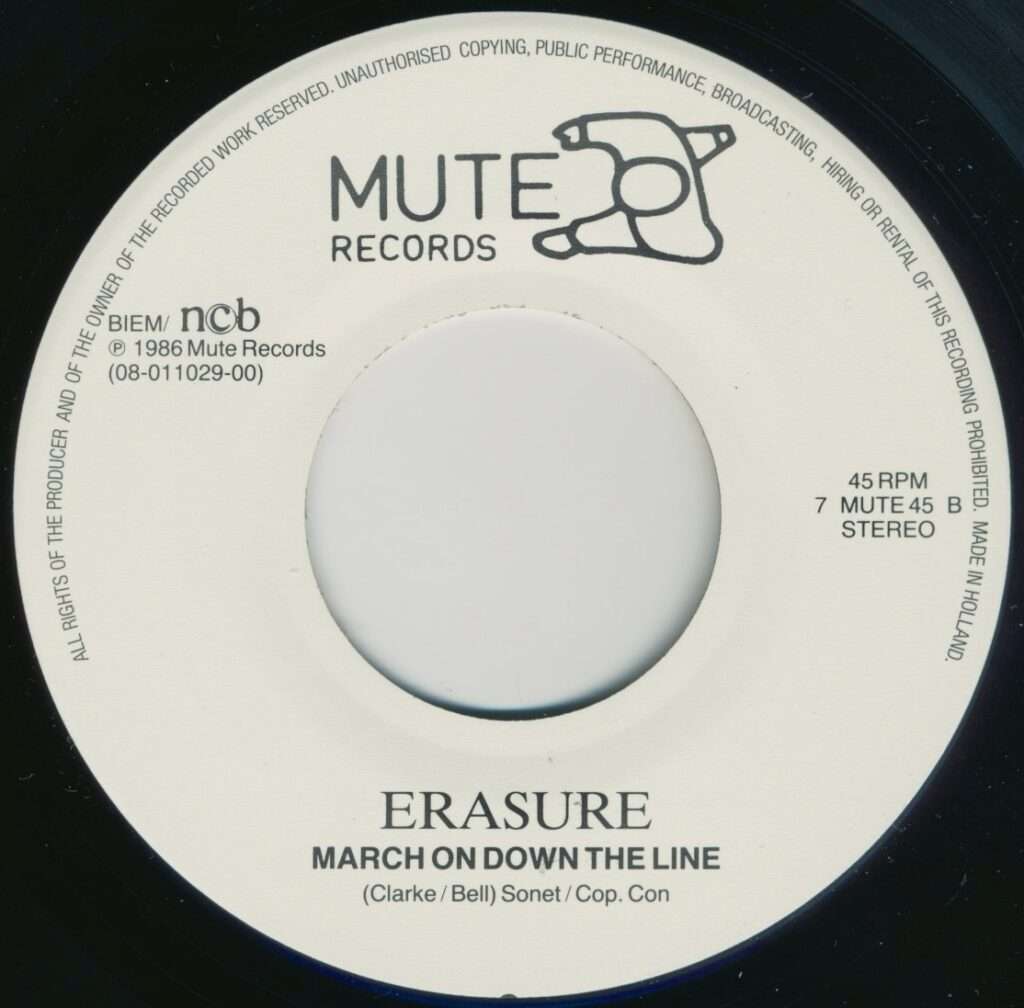
My copy: 7″, 45 RPM, Scandinavia, 1986, Mute
Trackslistan (Swedish radio chart): 6 weeks, peaked at #4, #30 on year-end list 1986