A Secret History of an ’80s Melancholy
We, the youth of Scandinavia, were always obsessed with the big, sleek pop sound pouring out of the UK and the US in the 1980s. But something else was creeping in, a certain kind of German melancholy, sung in perfect, if slightly stiff, English. It arrived not with a bang, but with a lingering, fog-machine-level mist of synth and emotional vulnerability. This was the moment Münchener Freiheit, or just Freiheit as they were known on their international releases, crossed a sea of language barriers with a single, potent declaration: “Every Time.”
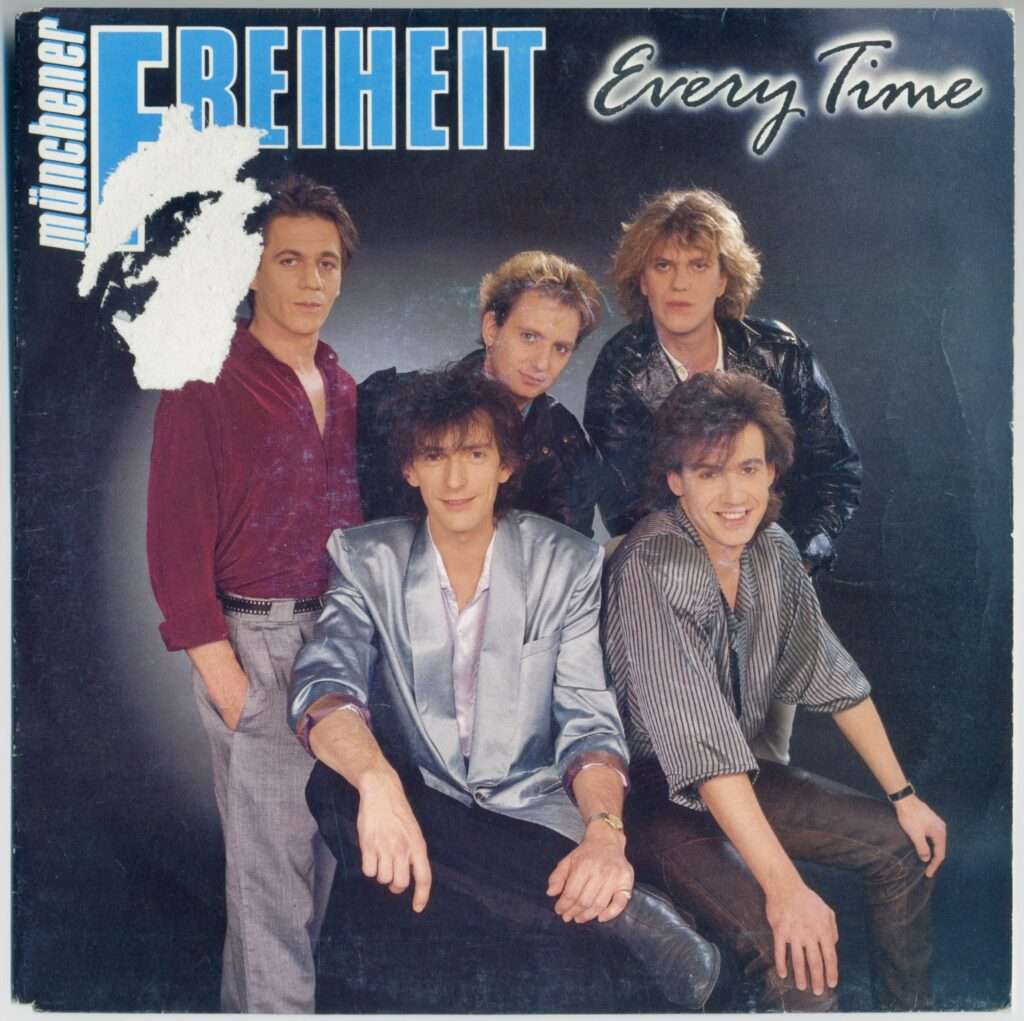
In the summer and autumn of 1986, this song became an unlikely soundtrack to our Northern European reality. It was a sensation not because it was a groundbreaking musical statement—it was unapologetically pure 80s pop—but because it carried a specific, shared feeling. The German band had already found enormous success on their home turf with the original German version, “Ohne dich (schlaf’ ich heut’ Nacht nicht ein),” which translates to “Without you (I won’t sleep tonight).” But for us, hearing it in English gave it an almost cinematic, universal scope. This wasn’t a local band’s hit; it was the continental ballad that found its spot on our pop radio, spending six weeks on Trackslistan and climbing to the sixth spot. It was prominent enough to land at number 39 for the whole year, a quiet victory in a crowded field of hits.
The Weight of a Foreign Love Song
The core of “Every Time” is its sheer, overwhelming devotion, a love so total it’s almost alarming. Stefan Zauner’s vocals deliver the lyrics with a kind of earnest, slightly desperate intensity. “Your love’s like an ocean / I’m drowning in your soul / I’m blinded by emotion / I’m going to lose control,” he sings, laying out the emotional stakes with no subtlety. This wasn’t the cool, detached romance of some synth-pop contemporaries; this was feeling with a capital F. It resonated deeply with the European sensibility of letting your feelings be visible, even messy. The sound production is what truly makes it: the pulsing bassline, the echoing drums that sound like they were recorded in a vast, empty hangar, and those crystalline, slightly tragic-sounding synth chords. It creates a soundscape of beautiful, hopeless commitment.
The genius of this international version was how it maintained the drama of the German original while wrapping it in a package that felt immediately accessible across borders. The band, named after a square in Munich, became an exotic European act, not a domestic German one. They symbolized a kind of polished, accessible Euro-rock, distinct from the rougher edges of the Neue Deutsche Welle or the massive, stadium-sized American acts. They were a European secret weapon in the pop wars.
Freedom in the Familiar
The transition to singing in English was, for many continental bands, a calculated risk—a necessity for broader European and international success. But for Münchener Freiheit, it felt less like a cynical move and more like an emotional key. By delivering such a deeply felt lyric in the language of global pop, they unlocked an intimacy with a wider audience. They were selling a specific brand of European longing, a romanticism that was perhaps more comfortable expressing itself in a second language, giving the sentiments a protective layer of distance that somehow made them feel more profound.
Think of it: a German band, singing in English, making a major mark on Scandinavian radio. It speaks to a shared culture of pop fascination and the easy flow of music across our borders. The song was a hit in Norway and Greece as well, hitting number one in the latter. It wasn’t about where the music came from; it was about the universal ache of infatuation it described. “Every Time you need me, I’ll be here / Every Time you leave me, I’ll be near”—it’s the ultimate vow of presence, bordering on obsession.
“Your love’s like an ocean / I’m drowning in your soul / I’m blinded by emotion / I’m going to lose control”
The Enduring Melancholy
Decades later, “Every Time” retains its power not as a novelty relic but as a pure dose of 1980s emotionality. It’s a beautifully crafted piece of pop that understands the drama inherent in young love. The song isn’t remembered just for its chart performance; it is remembered because it provided a luxurious, atmospheric backdrop to the quiet moments of the European youth in the mid-eighties. It captured the intensity of those adolescent relationships that felt like the entire world. It was a song for staring out the bus window on a grey November day, convinced your own love life held this exact level of epic tragedy.
Münchener Freiheit never quite replicated this European cross-border magic with their subsequent English-language work in the same way, but this one track sealed their place in our shared pop memory. It’s the sound of a very specific, very European brand of sweet, irresistible heartache.
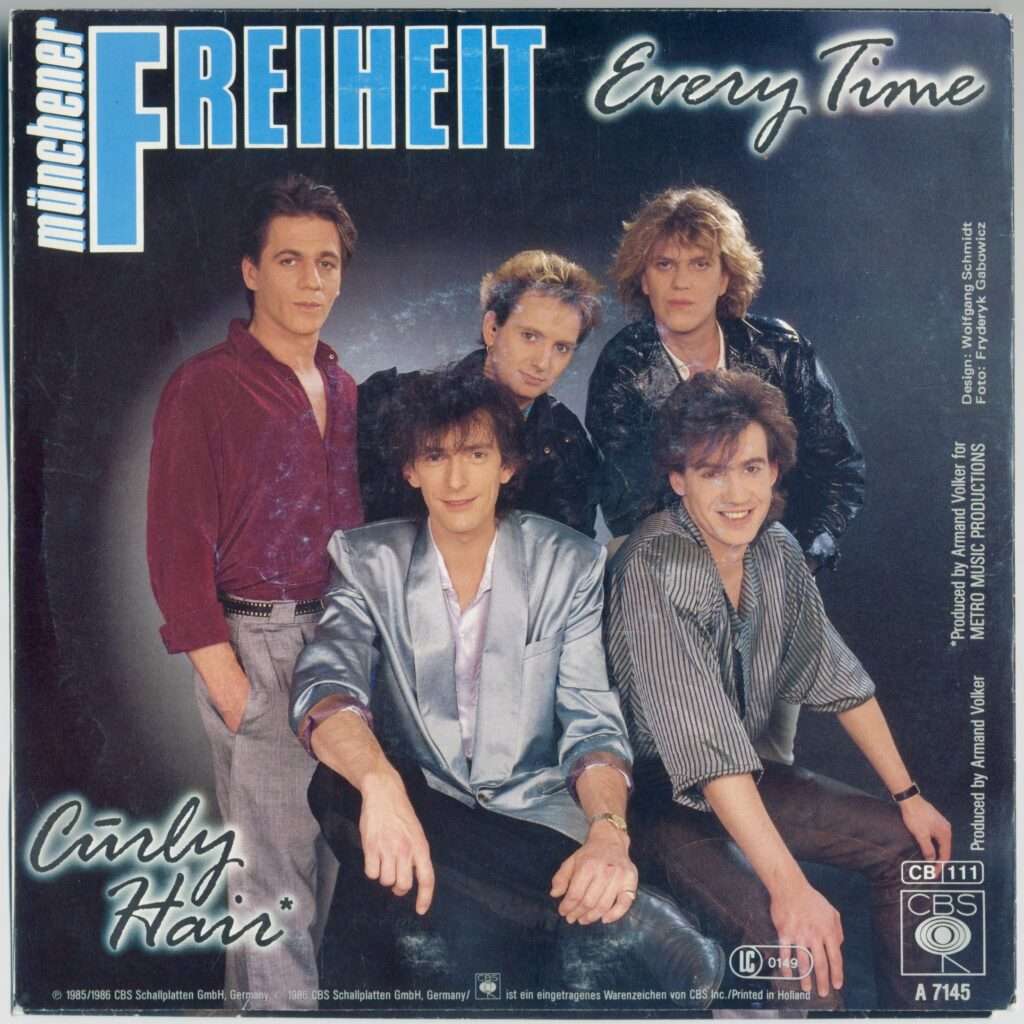
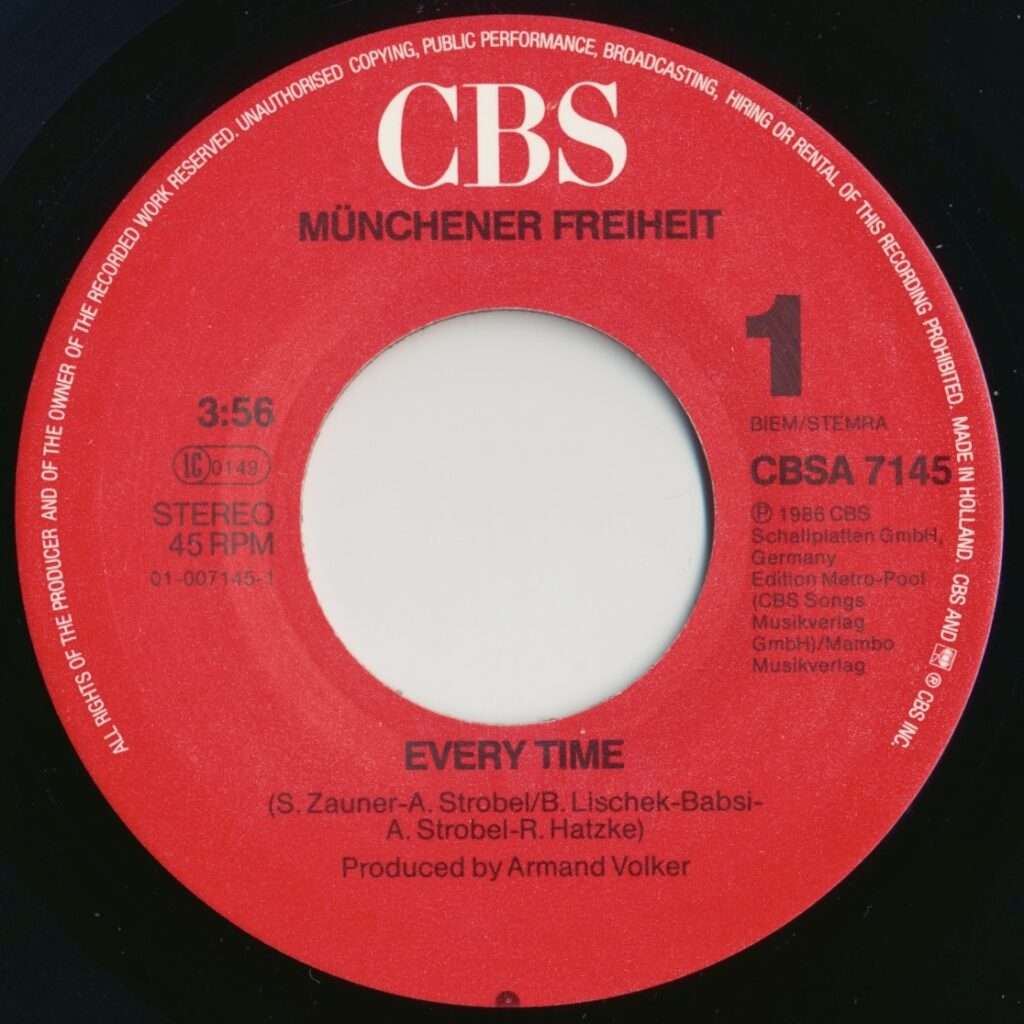
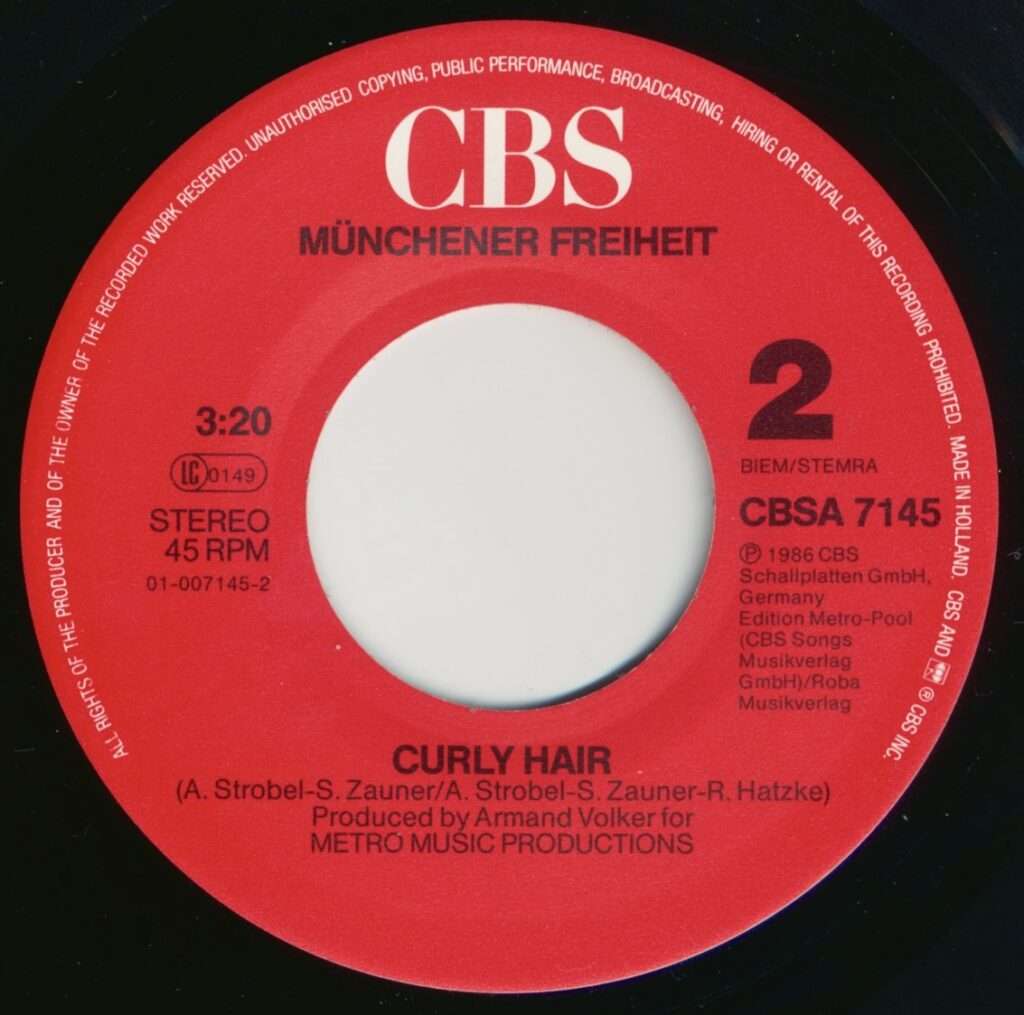
My copy: 7″, 45 RPM, Europe, 1986, CBS
Trackslistan (Swedish radio chart): 6 weeks, peaked at #6, #39 on year-end list 1986