A Ball and Chain and a Microphone
In early 1989, Europe was the only place in the world where you could walk into a record shop and buy a new Michael Jackson single called “Leave Me Alone”. This wasn’t just the eighth single from his colossal Bad album campaign, nearly eighteen months after the album first appeared; it was a deeply personal cry for help wrapped up in a funk-pop song. For us in places like Sweden, Ireland, and the UK, this single was the final word, a defiant sign-off to one of the most commercially successful periods in pop history.
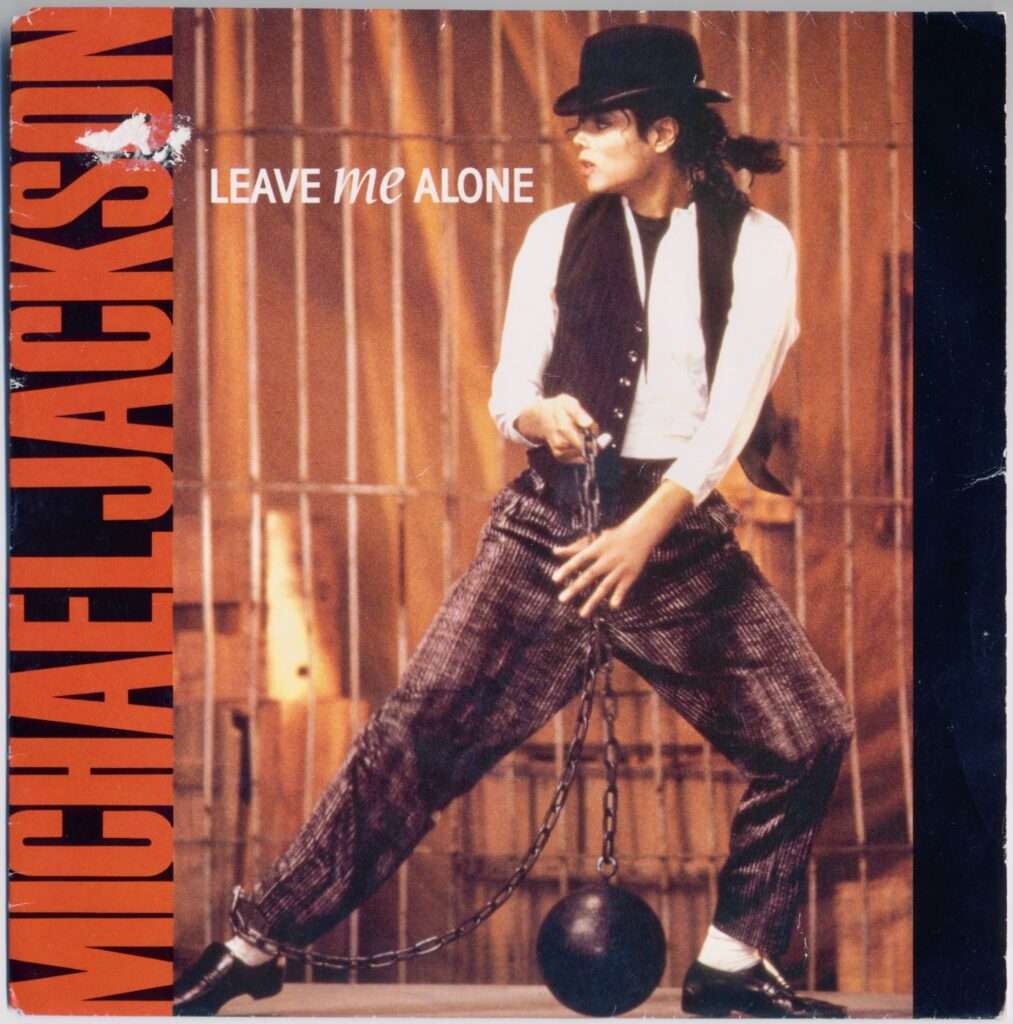
The song, which Jackson wrote and composed himself, was his creative counterattack against the sensational and often fabricated tabloid stories that had plagued him since the mid-1980s. It was the direct, almost aggressive sound of a superstar fighting back, a public message from an artist whose life felt like a cage. The single’s cover art in Europe made this perfectly clear: Jackson, in his signature hat, was depicted standing, but restricted by a heavy ball and chain, with a background suggesting iron bars. The weight of his fame was literally illustrated as a burden he could not escape.
A Star Under Satirical Siege
The song’s accompanying music video, or “short film” as Jackson preferred, was a complete masterpiece of self-aware satire, elevating the message from a single track to an epic artistic statement. Directed by Jim Blashfield and Jerry Kramer, it took over nine months to complete because of the complex stop-motion and visual effects.
In the video, Jackson directly mocked the absurd rumors about his life. He sings from within magazine covers with fabricated headlines like “Michael’s Space-Age Diet”. He dances with stop-motion bones in a scene that pokes fun at the widely circulated rumor that he attempted to purchase the skeletal remains of Joseph Merrick, the “Elephant Man”. There’s even a pointed, whimsical sequence featuring a nose being vigorously chased by a surgical scalpel, a direct reference to the media’s obsession with his plastic surgeries. The entire video culminates in a powerful allegory: the bizarre, flimsy amusement park built on and around a colossal Michael Jackson figure, who is tied down by small dogs representing the press, eventually breaks free and rises into the light, destroying his prison. It was a visual triumph, winning the Grammy Award for Best Short Form Music Video in 1990.
The Unlikely European Success Story
The single’s release was a smart strategic move, especially in European markets where it was exclusive. It was a huge success, showing that deep into the album cycle, Jackson could still generate massive hits. In the UK, it peaked at No. 2, and it topped the charts in both the Republic of Ireland and Greece.
In Scandinavia, where we love our pop music, the song proved to be a huge radio favorite. The record spent five weeks on the popular Swedish radio chart Trackslistan, peaking at number 5, and even finished the year as number 49 on the Trackslistan year-end list for 1989. This popularity confirms that the song wasn’t just a quick seller; it became an ingrained piece of pop culture and a radio staple in the Nordic region that year. Its success here, alongside its No. 6 peak in Norway, confirmed its significant appeal across Northern Europe.
“‘Cause there’s a time when you’re right / And you know you must fight / Who’s laughin’, baby? / Don’t you know?”
An Artist’s Double Life
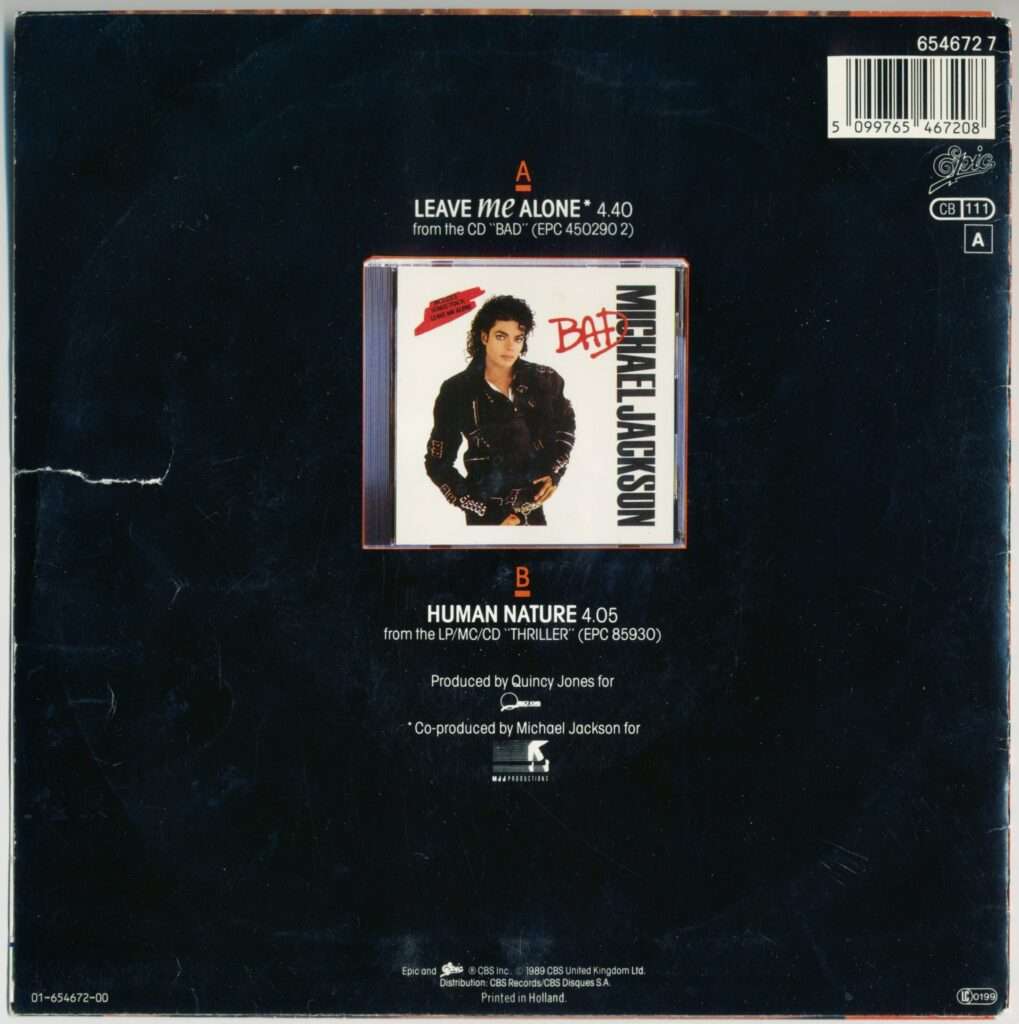
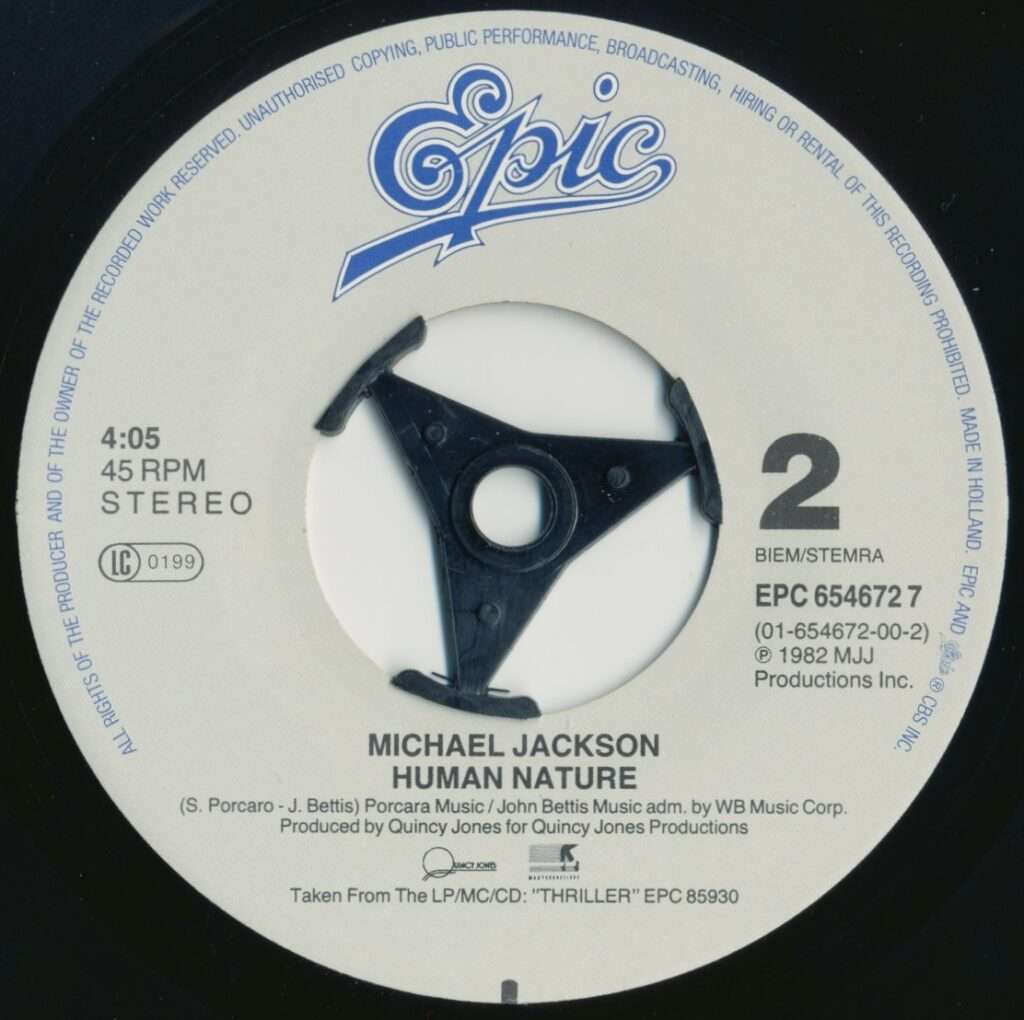
Perhaps the most fascinating element of the European single was the decision to pair “Leave Me Alone” with a classic track from the Thriller album as the B-side: the reflective and melancholy “Human Nature”. This strategic coupling offered a glimpse into Jackson’s artistic duality.
“Leave Me Alone” was the aggressive, public demand for privacy and solitude. By contrast, “Human Nature,” with its gentle, introspective lyrics about urban alienation and the search for connection, represented the quiet, internalized yearning for simple humanity. The label was essentially packaging two sides of the same celebrity experience: the external fight against the press and the internal longing for peace. Despite the single’s international success and iconic video, Jackson never once performed “Leave Me Alone” live on any of his subsequent tours. It remained a private confession, a piece of recorded art delivered to the world through record and video, but kept strategically separate from the celebratory energy of his stadium shows.
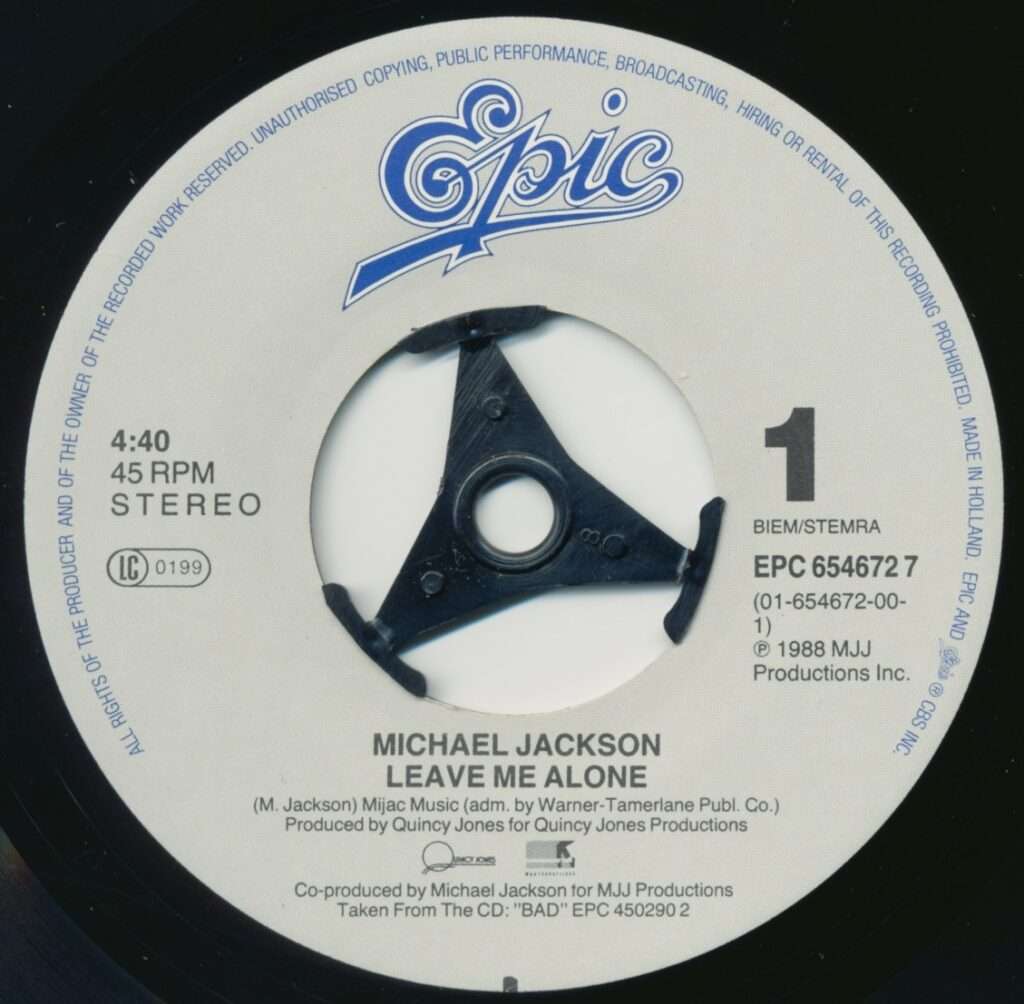
My copy: 7″, 45 RPM, Europe, 1989, Epic
Trackslistan (Swedish radio chart): 5 weeks, peaked at #5, #49 on year-end list 1989