The Happy Ending That Launched a Dynasty
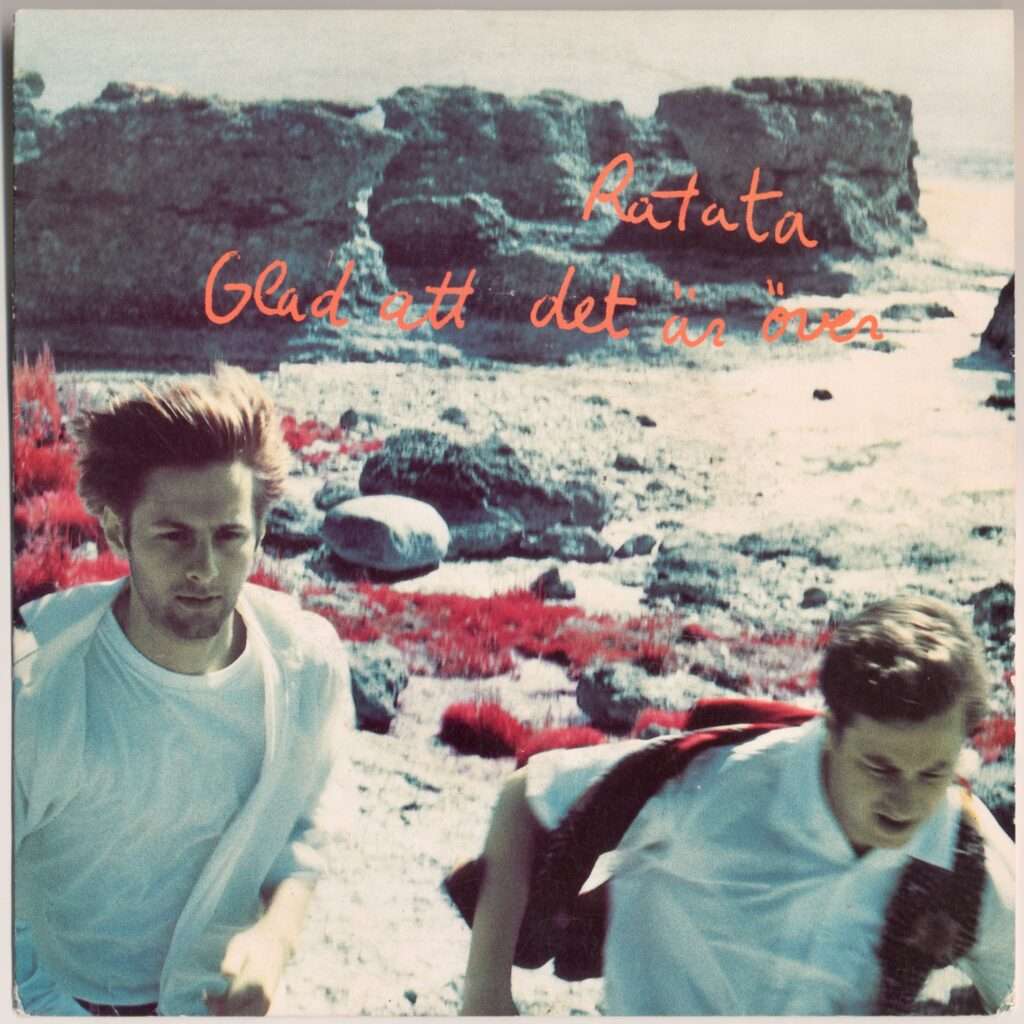
It wasn’t a lament draped in silk. It wasn’t the slow, heartbreaking fade-out that pop fans expected from a break-up ballad. It was a slam of the door. When Ratata released “Glad att det är över” (Happy that it’s over) in 1989, it hit the Swedish airwaves with a cathartic jolt, a raw declaration of “good riddance” that felt aggressive and liberating all at once. This track spent eight solid weeks on the influential radio chart Trackslistan, peaking at number 3 and finishing the year at number 19 on the chart’s annual countdown. Yet, its true story isn’t in the numbers—it’s in the subtext. This single was the farewell anthem of a great Swedish duo, and the secret launch code for a solo empire.
The Great Escape
The core duo of Ratata, Mauro Scocco and Johan Ekelund, had been evolving since 1980, moving from their New Wave origins into sophisticated, “romantic mainstream pop”. By 1989, they were at their creative and commercial peak, a fact confirmed by the Gold certification of the single and its parent album, Människor under molnen. But Scocco had already tasted massive solo success in 1988 with his self-titled debut and the monumental hit “Sarah”. The Ratata reunion for the 1989 material and subsequent tour felt less like a fresh start and more like a carefully planned, spectacular final bow.
The song’s lyrics perfectly mirrored this grand finale. It detailed the fictional relief of escaping a destructive romantic relationship, confronting chronic dissatisfaction and even infidelity with a resolute finality: “Jag är glad att det är över, så lämna mig ifred” (I am happy that it is over, so leave me alone). This emotional pivot—a definitive articulation of relief rather than lamenting loss—gave the song its mass appeal. But knowing that Scocco would fully commit to his solo projects in 1991 gives the title a profound, meta-meaning. The “happy that it’s over” could just as easily describe the frontman’s satisfaction in concluding his obligations to the band format and transitioning into the fully self-directed world of a solo artist.
A Meticulously Crafted Pop Statement
For all the emotional rawness in the vocals, the production of “Glad att det är över” was anything but casual. The track represented the most refined state of Ratata‘s music: highly polished, melodically driven, and structurally sophisticated pop that Scocco often called “arenapop”. The sophistication was a true collaboration. While Scocco provided the distinct, often melancholic lyrical narratives, Johan Ekelund, a formal duo member since 1983, was crucial to the complex sonic landscape. Ekelund was a sought-after producer in his own right, and his co-writing credit on this magnitude of a track, coupled with his co-production role with Scocco and Kaj Erixon, confirms his essential contribution to the band’s mature sound.
The recording sessions were a premium endeavor, utilizing prestigious Stockholm studios, including the legendary Polar Studio—famously associated with ABBA—indicating a high-budget project aimed at achieving international standards. The arrangement even went beyond typical electronic pop, incorporating live orchestral elements to enhance its dramatic texture, specifically noting cello and cymbal contributions. This was a meticulously crafted pop statement, built for maximum impact on the radio and stage.
“Men ingen är så blind / Som den som inte vill se / Du kunde älskat med min bäste vän / När jag låg bredvid”
The Souvenir of Conflict and Independence
The success of “Glad att det är över” cemented the track’s status as a dominant radio fixture. It was the lead promotional track for the Människor under molnen tour, which would become recognized as Ratata‘s most successful tour. This high point of collective commercial and artistic achievement, however, coincided with immense personal conflict for Scocco: his well-documented struggle with stage fright. The 1989 tour promoting the single became his final major touring engagement for nearly thirty years. The desire to avoid live performance heavily motivated his transition to the role of a producer, songwriter, and label head, which are roles far less performance-dependent.
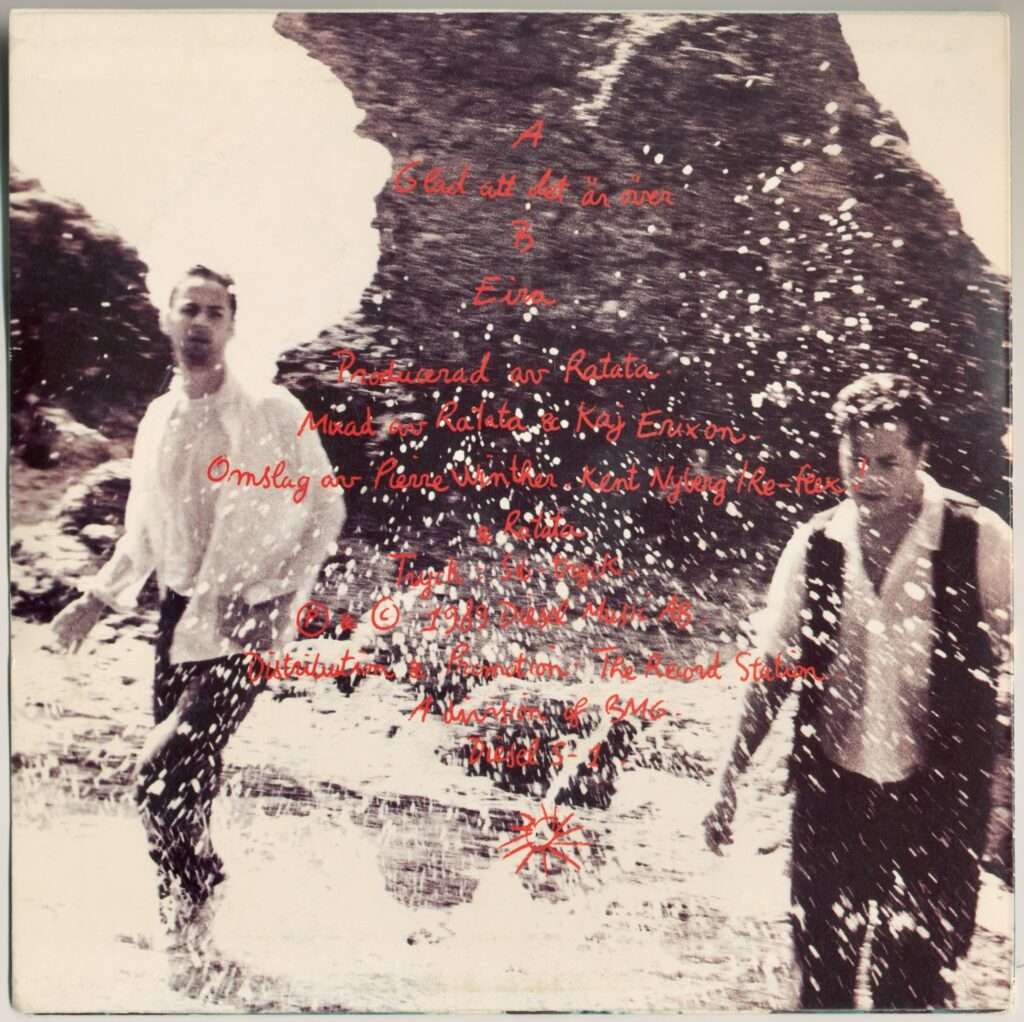
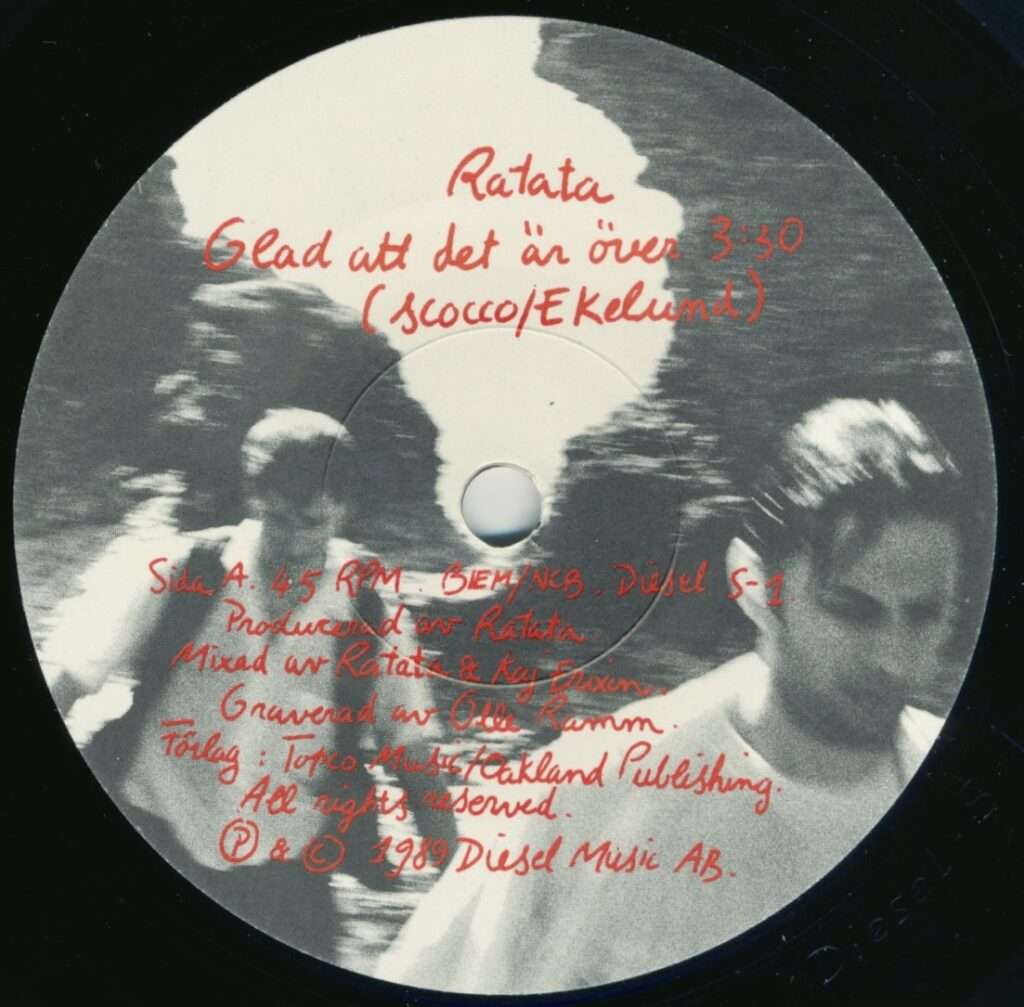
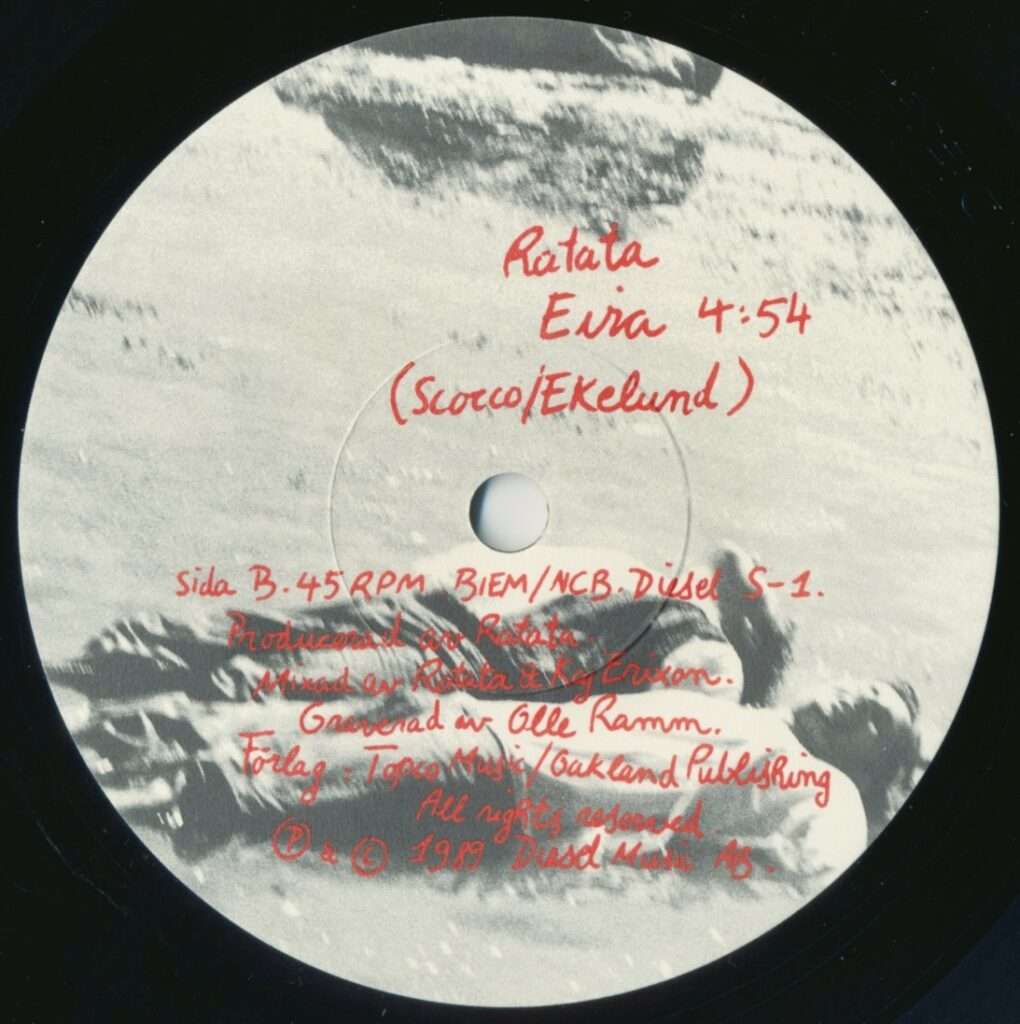
This strategic transition is forever etched into the artifact itself. The single was released under the catalog number Diesel S-1 with the copyright of Diesel Music AB. This was the foundational single of Mauro Scocco’s new, independent corporate entity, which he established to provide himself with unparalleled creative and commercial autonomy. By launching Ratata’s final, guaranteed-hit material through his own newly minted label, Scocco ensured that the commercial returns and infrastructure were channeled directly into his self-controlled structure. The physical record is the commercial birth certificate of a major, independent music publishing house in Sweden. The song about a relationship being over provided the institutional foundation for Scocco’s successful decades-long run as an independent artist and music mogul.
My copy: 7″, 45 RPM, Sweden, 1989, Diesel Music
Trackslistan (Swedish radio chart): 8 weeks, peaked at #3, #19 on year-end list 1989