An Anthem for a Nordic New Year
The moment Belinda Carlisle’s voice soars into the final, glorious chorus of “Heaven Is a Place on Earth,” the air changes. It’s not just the sudden, unexpected musical lift, the famous key change that critics have rightly called one of the greatest in pop history. It’s the feeling it gives: a rush of cathartic, stadium-ready euphoria. This feeling, this promise of terrestrial paradise, arrived in Scandinavia like a blast of golden California sun just as the dark, cold 1987 turned into 1988.
In Sweden, where the song quickly dominated the airwaves, “Heaven Is a Place on Earth” achieved a confirmed number one peak on the national charts. For six straight weeks in 1988, it was a centerpiece of the influential, listener-voted radio countdown, Trackslistan, where it also reached the top spot before finishing the year as the 13th biggest track. This widespread, simultaneous success in Sweden and neighboring Norway wasn’t an accident; it confirmed a regional love for Carlisle’s specific brand of polished, melodic, synth-infused power pop. It was the sound of a former Go-Go’s punk star completely transforming her identity into a sophisticated, global pop artist.
The Star Power Behind the Sound
The massive sound of the track was no small feat; it was a high-level creative operation. Much of the credit belongs to producer and co-writer Rick Nowels, who had an architectural role in guiding Carlisle toward her maximum commercial and artistic potential. He and co-writer Ellen Shipley crafted a song that was widely praised for its assertive opening, huge hooks, and unwavering conviction.
But the production detail that is endlessly fascinating is the sheer star power enlisted to build the song’s lush, massive backing vocals. This wasn’t just a simple choir; it was a generational vocal synergy. Standing behind Carlisle, lending their talent, were Michelle Phillips of The Mamas & the Papas and her daughter, Chynna Phillips, who would soon become famous in Wilson Phillips. They were joined by the song’s creators, Nowels and Shipley, and also the celebrated songwriter Diane Warren. This intentional layering of iconic and emerging voices provided an unprecedented depth and richness, giving the illusion of a stadium-ready choir and truly elevating the track’s emotional punch.
The Story of the Love and the Steps
The song’s core emotional thesis is beautifully simple, yet profound: paradise is not a distant, posthumous reward, but an accessible, earthly state realized through human love and connection. The lyrics take the simple gestures of a partner’s return or a slow dance and elevate them to the miraculous. Lines like, “When I feel alone, I reach for you / And you bring me home” speak to a love that provides essential rescue and stability.
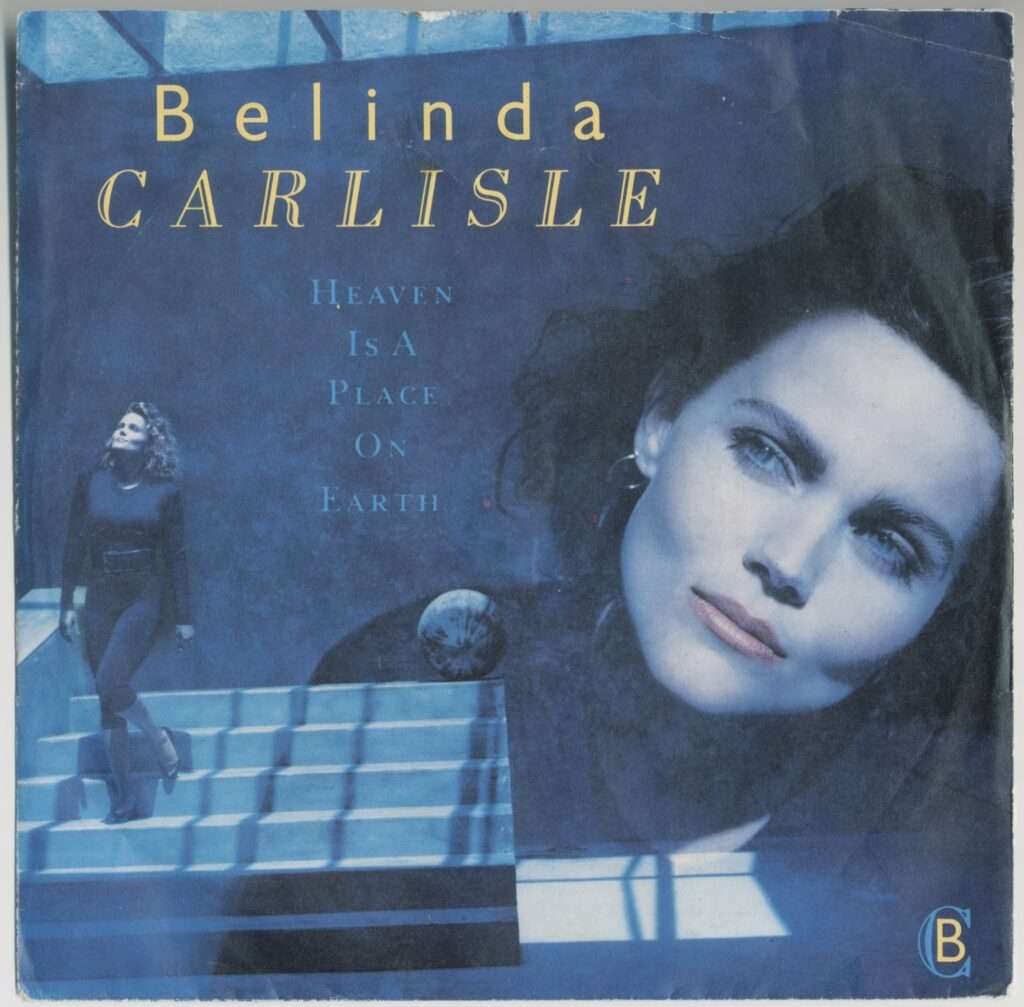
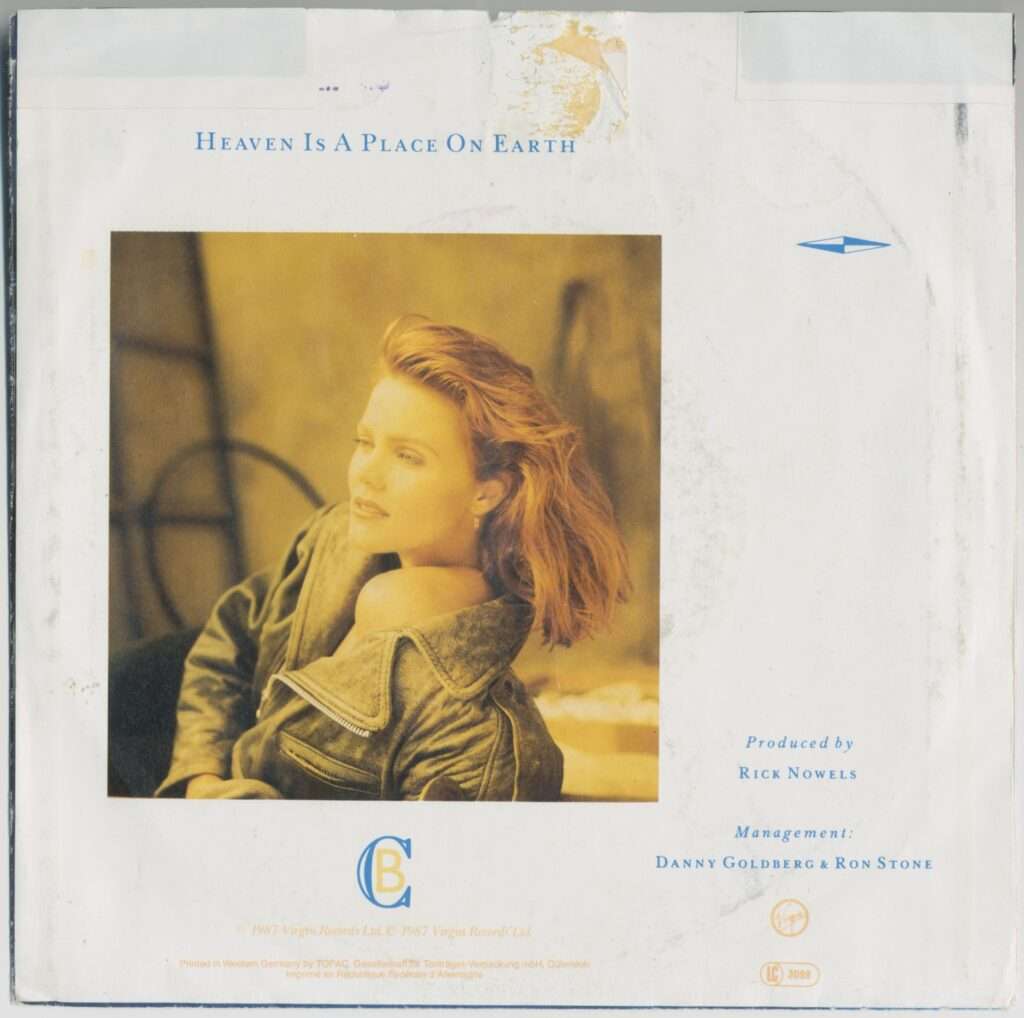
This grounded interpretation was perfectly mirrored in the visual marketing. The European single sleeve juxtaposed two contrasting looks: a front cover bathed in an ethereal, deep atmospheric blue that evoked “heaven,” and a reverse sleeve featuring a warm, golden-hued portrait of Carlisle in a casual denim jacket, embodying the “place on earth”. The music video itself, directed by the unexpected choice of Academy Award-winning actress Diane Keaton, was another high-level strategic move. Keaton’s involvement signaled immense faith in the single, providing a cinematic, artistic weight beyond typical MTV fare and cementing Carlisle’s image as a polished solo artist.
“In this world, we’re just beginnin’ / To understand the miracle of livin’ / Baby, I was afraid before / But I’m not afraid anymore”
A Cultural Life Beyond the 80s
Decades later, “Heaven Is a Place on Earth” has proved its resilience. While it remains Carlisle’s only number one single in the UK, accumulating over 700,000 pure sales to date, its modern relevance is confirmed by a massive 53.5 million UK audio streams.
The song’s most significant revival came with its prominent use in the 2016 Black Mirror episode “San Junipero”. The episode, which explores themes of virtual reality, love, and choice in the afterlife, aligned seamlessly with the song’s central premise. This successful re-contextualization wasn’t just a clever needle-drop; it gave the song a profound second life, establishing it as a modern LGBTQ+ anthem and introducing its message of transcendent love to an entirely new generation of listeners. The song’s ability to absorb and reflect new meanings assigned by different cultural contexts is the hallmark of a true pop classic.
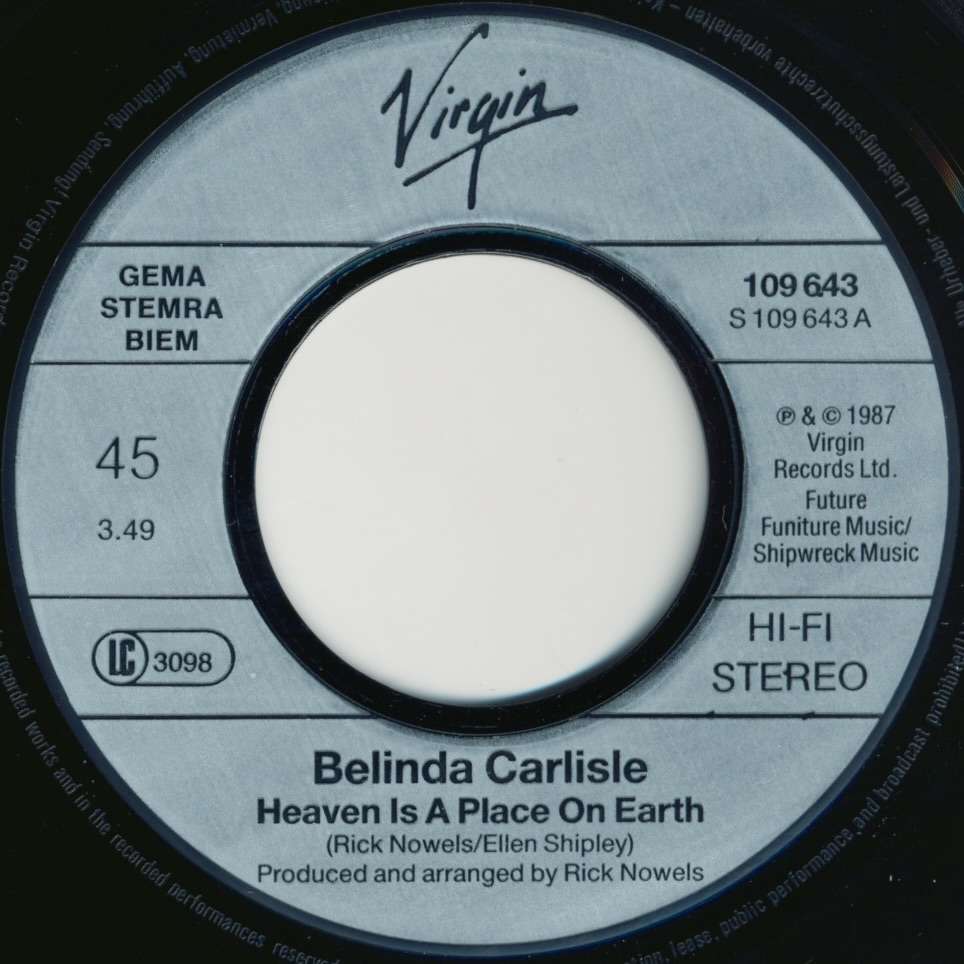
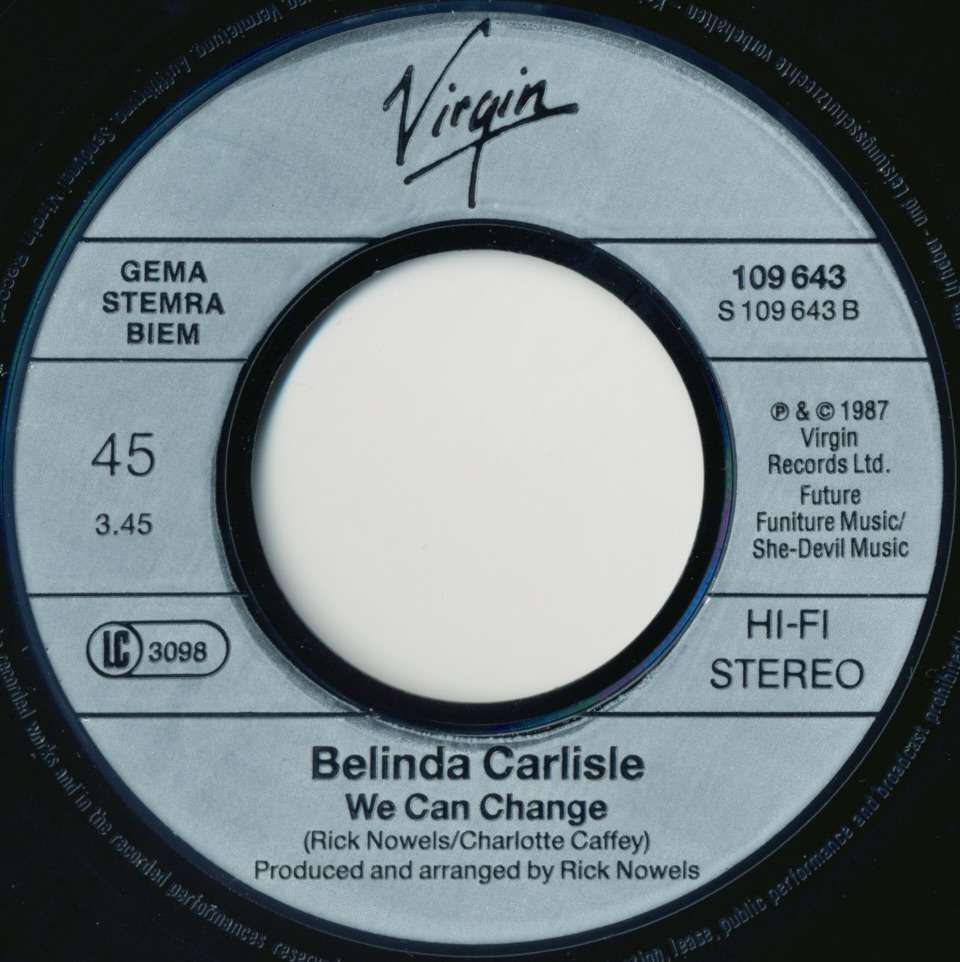
My copy: 7″, 45 RPM, Europe, 1987, Virgin
Trackslistan (Swedish radio chart): 6 weeks, peaked at #1, #13 on year-end list 1988